Enhanced Tissue Oxygenation
Increased dissolved oxygen may support areas with limited blood flow, aiding natural repair and recovery pathways.

Pressurized, oxygen-rich therapy designed to support tissue oxygenation, recovery, and cellular resilience as part of a physician-led longevity and performance program.
Hyperbaric Oxygen Therapy (HBOT) is a non-invasive, pressurized treatment that delivers high-concentration oxygen in a controlled environment. By increasing both atmospheric pressure and inspired oxygen levels, HBOT allows your body to dissolve significantly more oxygen into the bloodstream—helping tissues receive the oxygen they need for optimal repair, recovery, and performance.
At the Institute for Human Optimization, HBOT is integrated into a physician-led protocol designed to support cellular resilience, reduce inflammation, enhance mitochondrial function, and accelerate tissue healing. The result is a restorative experience that complements longevity, recovery, and performance-based programs.
Hyperbaric Oxygen Therapy (HBOT) works by combining increased ambient pressure with concentrated oxygen. Inside the chamber, this environment allows your lungs to absorb more oxygen than they can at standard atmospheric conditions—dramatically increasing how much oxygen is carried in your blood and delivered to tissues.
At IFHO, HBOT is integrated into carefully designed protocols that support recovery, tissue repair, and long-term cellular resilience. The process unfolds through three core physiological phases:
Once you are comfortably positioned inside the chamber, the pressure is gradually increased above normal atmospheric levels. This pressurized environment changes how gases behave in your body and sets the foundation for enhanced oxygen delivery.
At higher pressures, breathing oxygen-enriched air allows substantially more oxygen to dissolve directly into your plasma. This elevated oxygen delivery supports tissues with limited blood flow, helps modulate inflammation, and can assist the body’s own repair processes.
Across a series of sessions, tissues experience repeated exposure to enhanced oxygen availability. This may support collagen formation, angiogenesis, immune modulation, and mitochondrial function—making HBOT a powerful complement to regenerative, performance, and longevity-focused programs.
Hyperbaric Oxygen Therapy (HBOT) increases the amount of dissolved oxygen in your blood, creating an internal environment that can support tissue recovery, cellular metabolism, and long-term resilience. While individual responses vary, HBOT is often used as part of a broader strategy for repair, performance, and longevity.
Research on hyperbaric oxygen has explored its role in tissue oxygenation, wound support, neurological recovery, and inflammatory modulation. HBOT at IFHO is applied within a physician-led framework, drawing on this emerging and established literature while tailoring treatment to the individual.
Increased dissolved oxygen may support areas with limited blood flow, aiding natural repair and recovery pathways.
HBOT is often integrated after intense physical, metabolic, or environmental stress to help support the body’s restorative processes.
Greater oxygen availability may support mitochondrial activity and ATP production, contributing to clearer energy at the cellular level.
HBOT may help support microvascular function and oxygen delivery to tissues involved in healing, performance, and longevity.
In select, medically supervised contexts, HBOT has been explored for its potential to influence inflammatory and immune pathways.
Oxygen-rich, pressurized environments may support brain metabolism, which is why HBOT is sometimes considered in neurological optimization strategies.
At IFHO, HBOT can be combined with regenerative therapies, IV infusions, and other longevity programs for a coordinated, systems-level approach.
For high-performing individuals, HBOT may be used to support recovery, adaptation, and the demands of intensive training or leadership.
Hyperbaric Oxygen Therapy at the Institute for Human Optimization is delivered in a structured, safe environment with clear safety protocols. Every session is supervised, guided, and monitored so you can focus on resting while the chamber and oxygen environment do the work.
Before your first HBOT treatment, you will receive written guidelines outlining what to wear, what to avoid bringing into the chamber, and how to prepare. Our team reviews these instructions with you in person and is available to answer any questions.
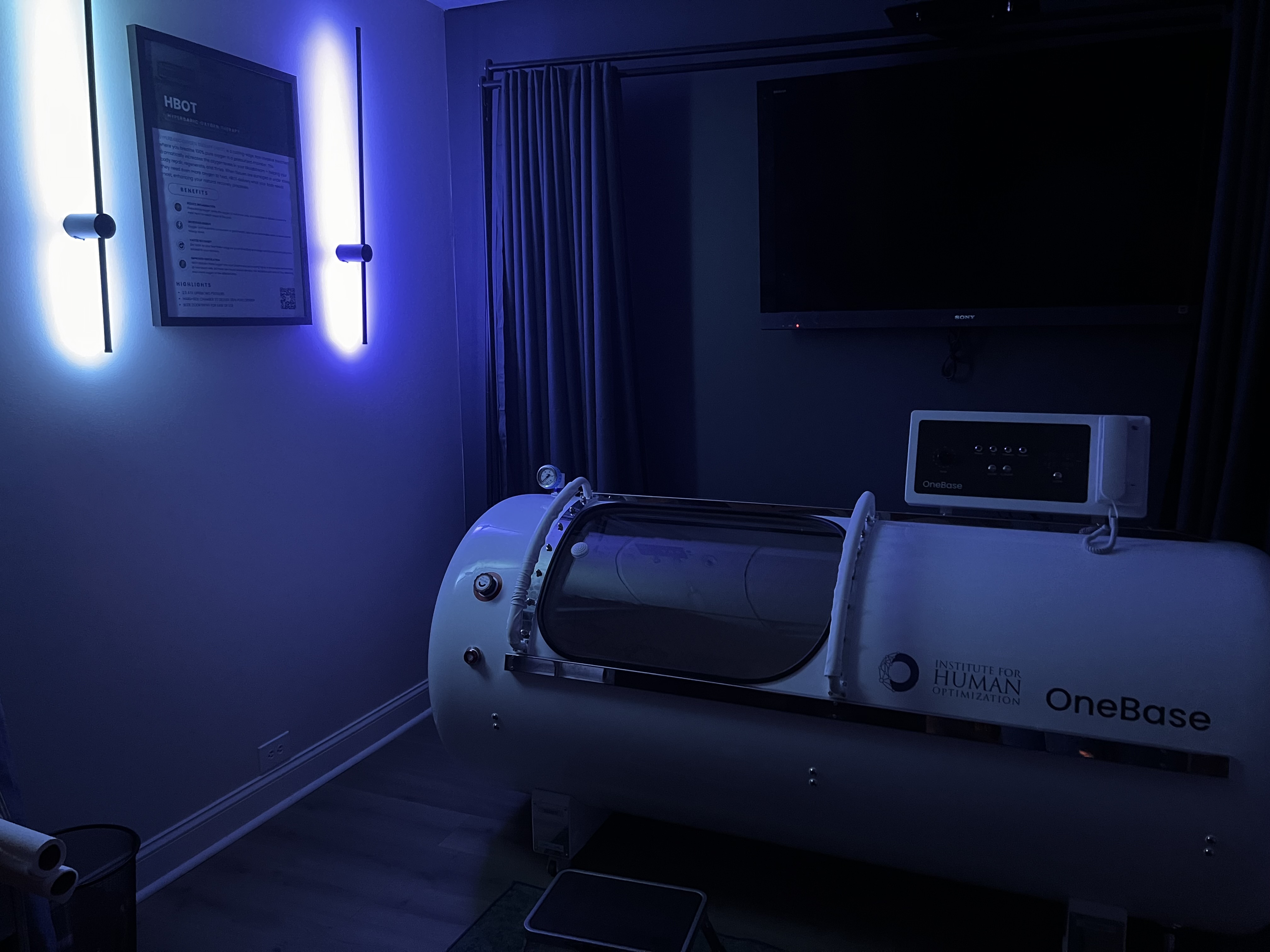
Before scheduling HBOT, you’ll complete a medical consultation and screening to evaluate your history, medications, and any potential contraindications. This may include questions related to lung health, ear and sinus issues, prior surgeries, implants, or other relevant conditions.
On the day of your session, you’ll check in with our team and review key safety points, including what to expect during pressurization and decompression. We confirm there have been no recent health changes and answer any remaining questions before entering the HBOT suite.
For safety, HBOT is performed in controlled, chamber-safe attire. You will be asked to change into clothing provided or approved by our team. Items such as outside footwear, metal accessories, hair products that are highly flammable, and loose personal items are restricted.
Electronic devices—including phones, smart watches, tablets, and headphones—are not permitted in the chamber. Our team will review a written “what not to wear / bring” checklist and confirm that all non-approved items have been removed before the session begins.
You will be assisted into the chamber and positioned comfortably, either reclined or lying down depending on the system used. Monitoring equipment may be applied as appropriate. Once the door is sealed, the care team maintains visual and verbal communication with you throughout the session.
The chamber is gradually pressurized to the prescribed level while you breathe oxygen-enriched air. You may notice changes in your ears similar to ascending or descending in an airplane; staff will coach you through equalization techniques. During the treatment phase, your comfort, vital signs and overall status are monitored. You are encouraged to relax, rest, or meditate—without reading devices or electronics.
At the end of the session, pressure is slowly reduced back to normal atmospheric levels. Once the chamber is fully decompressed and opened, you will be assisted out, given time to sit up and reorient, and offered water. Our team completes a brief post-session check-in, reviews how you felt during the treatment, and confirms next steps in your HBOT and broader optimization plan.
At the Institute for Human Optimization, Hyperbaric Oxygen Therapy is considered only within a physician-directed framework. HBOT is not a stand-alone wellness service; it is carefully integrated into broader recovery, performance, and longevity programs after medical evaluation.
HBOT is not suitable for everyone. Certain lung conditions, ENT issues, untreated pneumothorax, and other medical factors may represent contraindications. Final candidacy is determined only after a full clinical review and discussion of risks, benefits, and alternatives with your physician.
Physician-directed hyperbaric protocols at the Institute for Human Optimization
Required for all new HBOT patients to review your history, medications, imaging, and suitability for pressure and oxygen-based therapies.
Frequently Asked Questions
Hyperbaric Oxygen Therapy at the Institute for Human Optimization is delivered in a physician-directed, medical-grade hard chamber—not a spa add-on. These questions address how our approach differs from soft chambers, how we manage safety, and what to expect from a true hyperbaric protocol.
Most wellness centers use soft-shell inflatable chambers designed for relaxation, not medical therapy. These units operate at much lower pressures and do not create true hyperbaric conditions.
At the Institute for Human Optimization, we use a medical-grade hard chamber capable of reaching therapeutic pressures under physician oversight. This allows for precise pressurization, monitored oxygen delivery, and adherence to international hyperbaric safety standards.
No. Soft chambers (often called “mild HBOT”) generally operate around 1.1–1.3 ATA, which is only slightly above normal atmospheric pressure. At those levels, there is minimal to no meaningful increase in dissolved oxygen in the plasma.
Medical-grade hard chambers can reach clinically therapeutic pressures (typically 1.5–2.0+ ATA, depending on protocol). These pressures are what enable the physiological changes described in the hyperbaric oxygen literature. Soft chambers may feel relaxing, but from a physiology standpoint, they are closer to sitting in a mildly pressurized tent than receiving true HBOT.
The entire research base on Hyperbaric Oxygen Therapy is built on hard chambers or chambers capable of reaching specific ATA pressures. These systems allow pressure, oxygen, and time to be controlled precisely—conditions that are required to reproduce the effects seen in clinical studies.
In short, pressure + oxygen + time must all be present. Soft chambers cannot reliably provide the pressure component, which is why we perform HBOT exclusively in a medical-grade hard chamber.
When delivered in a clinical environment with proper evaluation, HBOT is generally well tolerated. At IFHO, your safety is central to how we design and deliver therapy.
We follow international hyperbaric safety guidelines, including HBOT International recommendations and oxygen-handling standards. Every patient is screened for potential contraindications, including certain lung conditions, ENT issues, medications, and recent health changes, before being cleared for treatment.
In a high-oxygen, pressurized environment, items like electronics, batteries, and chargers become fire and ignition risks. For that reason, the following are strictly prohibited in the chamber:
This is not specific to IFHO—it is a core element of hyperbaric safety worldwide.
Many personal care products contain oils, alcohols, or aerosolized compounds that can behave differently in an oxygen-rich, pressurized space. To reduce fire risk and maintain air quality, we ask that you avoid:
You’ll receive a written preparation checklist before your first session so you know exactly how to arrive.
For safety, HBOT is performed in 100% cotton or approved medical garments. Synthetic or stretchy fabrics, personal blankets, and non-approved clothing are not permitted in the chamber.
Our team will provide compliant garments and linens, as well as secure storage for your personal belongings, so you can relax knowing everything is in alignment with hyperbaric safety standards.
Most people find HBOT to be calm and restorative. The primary sensation you may notice is gentle pressure in your ears during the pressurization and decompression phases, similar to taking off or landing in an airplane.
Your technician will coach you through ear equalization techniques and monitor you throughout the session. Once at pressure, many patients rest, meditate, or even nap while the therapy runs.
There is no single “right” number of sessions for everyone. Hyperbaric Oxygen Therapy is prescribed based on your goals, diagnostics, and broader clinical picture.
That said, evidence-based HBOT is almost always delivered as a structured series, not as an occasional once-in-a-while session. Low-frequency use (for example, once or twice a month) may feel relaxing but generally does not reflect how HBOT is used in medical protocols.
At IFHO, your plan is designed after a full evaluation and is structured around consistent, repeated sessions over a defined period—so you’re following a purposeful, physician-directed protocol rather than “trying a chamber” here and there.
Candidacy is determined through a comprehensive medical review that may include your history, lung and ENT status, medications, imaging, and overall risk profile. Certain conditions—such as untreated pneumothorax, some lung diseases, or active sinus and ear issues—may represent contraindications.
Your physician will walk you through potential risks, benefits, and alternatives before any treatment plan is finalized.
Yes—when clinically appropriate and safely supervised. HBOT may be integrated with regenerative medicine, recovery protocols, Biological Audit®️ findings, or Executive Health programs as part of a comprehensive plan.
Any integration is done intentionally, with safety and long-term outcomes driving the decision—not simply adding HBOT as a stand-alone wellness service.
Hyperbaric Oxygen Therapy • Physician Directed
If you’re considering Hyperbaric Oxygen Therapy as part of a broader plan for recovery, performance, or longevity, our team will help you determine if a medical-grade hard chamber protocol fits your biology, goals, and risk profile.
All HBOT protocols at the Institute for Human Optimization are individualized and physician supervised. Sessions are not offered without prior medical evaluation.
Subscribe to Our Newsletter


© Copyright The Institute for Human Optimization 2025.
All Rights Reserved.