A Few Thoughts After the MVMNT Summit
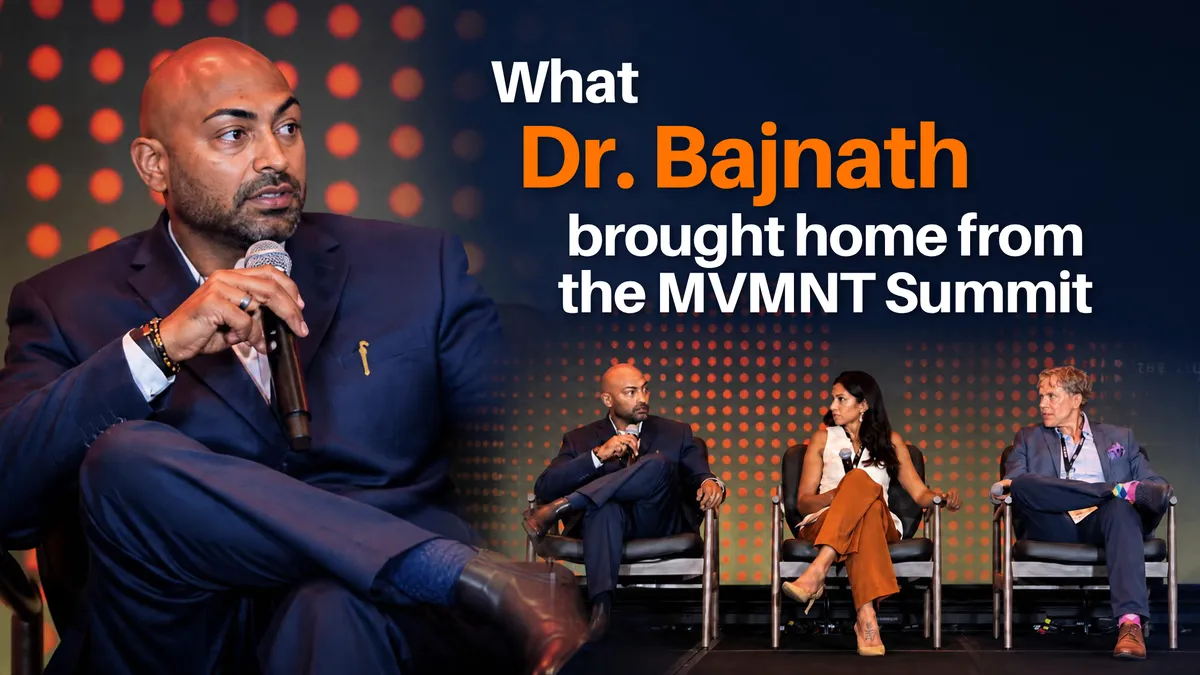
I spent part of this past week at the MVMNT Summit, where I had the opportunity to sit on a panel and spend time with physicians, scientists, founders, and others working across longevity medicine, precision medicine, diagnostics, technology, and human performance. There was a lot discussed over the course of the meeting, but the conversations I found most interesting centered on a problem medicine is going to have to confront fairly quickly: we are becoming capable of generating far more biological information about a patient than we have historically been trained to interpret at one time.
That is particularly relevant to the way I practice medicine. When I establish a biological baseline for a patient through my Biological Audit, I may be looking at hundreds of biomarkers alongside genetics, metabolomics, body composition, cardiovascular and metabolic testing, imaging, family history, clinical history, medications, lifestyle, and longitudinal changes. None of those data points exist independently, and simply ordering more testing does not make the analysis more sophisticated. If anything, the responsibility becomes greater because every additional piece of information creates another opportunity to overinterpret a finding, mistake association for causation, or intervene on something that may not actually be clinically meaningful.
That was part of what made the conversations around artificial intelligence at MVMNT interesting. There is an obvious application for computational tools when the volume of information becomes difficult for a human being to process simultaneously. Pattern recognition across large datasets, longitudinal comparison, literature synthesis, and eventually more sophisticated models of an individual’s physiology could meaningfully change how physicians approach complex patients.
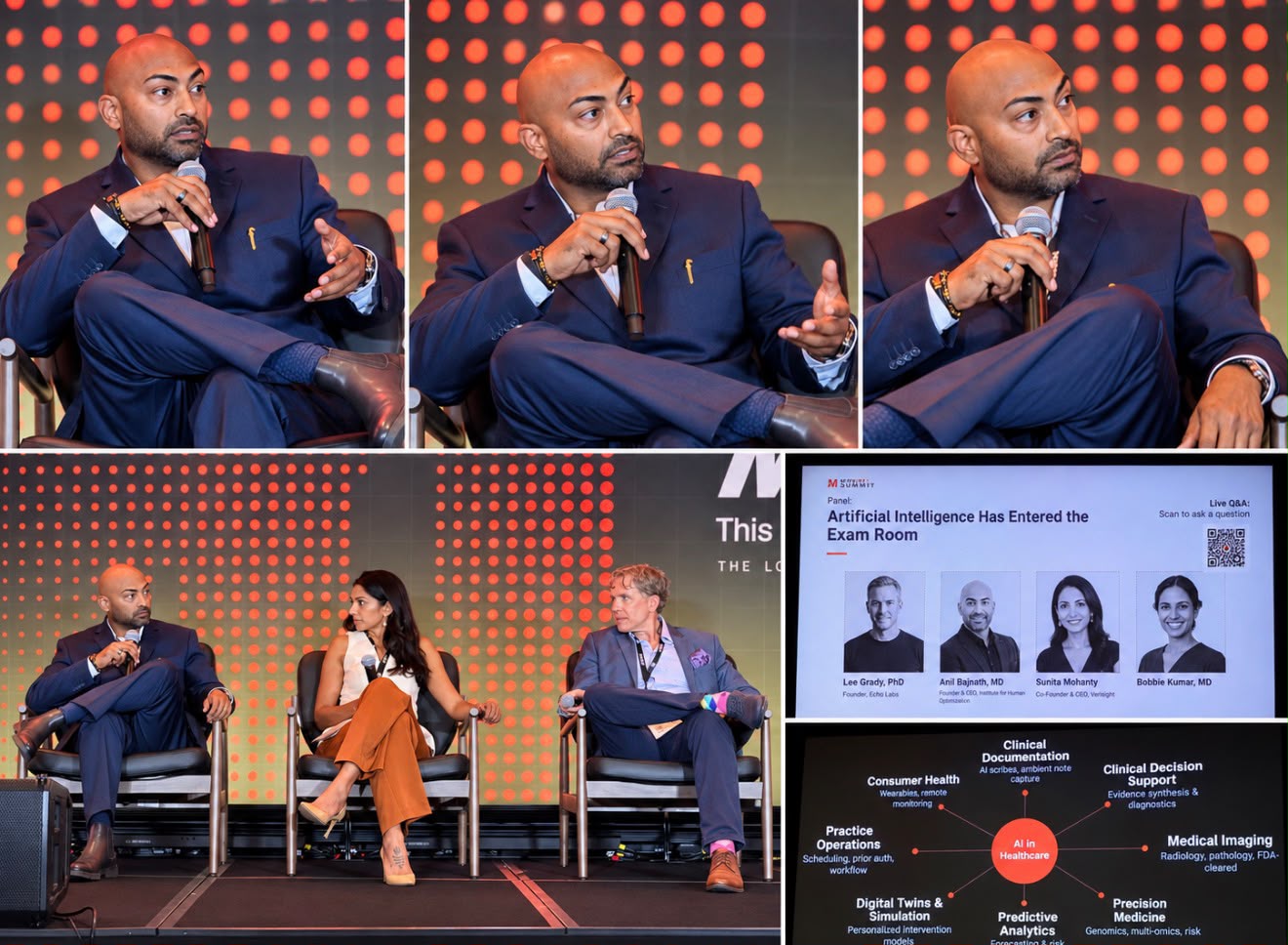
The discussion around digital twins naturally came into this as well. The concept is compelling: develop increasingly detailed computational representations of an individual using multiple layers of biological and physiological data, then use those models to better understand risk, trajectories, or potential responses to an intervention. We are not at a point where a digital representation of a patient can reliably reproduce the complexity of human biology, and I think that limitation needs to remain explicit. Biology is dynamic, context-dependent, and full of variables we either do not measure or do not yet understand. Still, the direction of the technology raises legitimate questions about what clinical decision support could look like when these systems become more sophisticated.
The ethical questions are just as important as the technical ones. If an algorithm identifies a pattern that a physician would otherwise miss, how much weight should that observation carry? How do we validate models when they are integrating data in ways traditional clinical trials were not designed to evaluate? What happens when an algorithm generates a prediction that cannot be adequately explained? And as increasingly sensitive biological information is collected, who controls it and how should it be used?
These are not reasons to avoid the technology. They are reasons to be precise about what the technology can and cannot currently tell us.
The same standard needs to apply more broadly to longevity medicine. There is an enormous amount of attention being directed toward peptides, hormones, regenerative medicine, advanced diagnostics, wearables, supplements, therapeutics, and interventions intended to influence health span. Some have substantial evidence behind them, some have interesting but preliminary evidence, and others are being marketed far beyond what the available human data can reasonably support.
I don’t think the appropriate response is to dismiss an intervention simply because the evidence is early. Medicine would make very little progress if we required decades of data before asking new questions. At the same time, biological plausibility cannot be treated as equivalent to a demonstrated clinical outcome. A pathway can make perfect sense mechanistically and still fail to produce the expected result in humans. A biomarker can improve without meaningfully changing morbidity or mortality. An association can be statistically impressive without being causal.
That distinction becomes especially important in longevity medicine because many of the outcomes we ultimately care about unfold over decades. We are trying to understand cardiovascular disease, neurodegeneration, metabolic dysfunction, cancer risk, frailty, loss of muscle and functional decline long before they become clinically obvious. That requires using intermediate measurements and emerging technologies, but it also requires being very clear about the limits of what those measurements allow us to conclude.
What I appreciated about MVMNT was having these discussions with people who are actively working through the same problems from different perspectives. The useful conversations weren’t about whether conventional medicine is wrong or longevity medicine is right. They were about how we improve the resolution with which we understand an individual patient without confusing more information with better medicine.
I left the summit thinking less about any particular technology or intervention and more about the infrastructure that will be required to practice precision medicine well. We are going to have access to increasingly granular biological data. AI will make portions of that information easier to analyze. Diagnostics will continue moving earlier in the disease process, and our ability to quantify physiology will continue to improve.
The difficult part will remain deciding what deserves clinical action, what deserves continued observation, and what is simply an interesting signal that we do not yet understand.
That is the part of precision medicine I find most interesting, and it was good to spend a few days around people willing to have a serious conversation about it.