
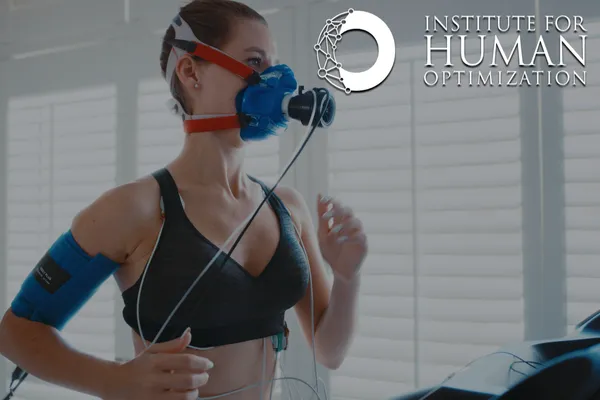
VO₂ Max and Longevity
Why Cardiorespiratory Fitness Is One of the Strongest Predictors of Healthspan
VO₂ max has traditionally been viewed as a performance metric. A number associated with endurance athletes, elite training programs, or competitive sport.
When examined through the lens of longevity science, however, VO₂ max becomes something far more meaningful.
It reflects how efficiently the body delivers oxygen, utilizes it at the cellular level, and adapts to physiological stress over time. In doing so, it captures the functional integrity of multiple systems that collectively determine how we age.
For this reason, VO₂ max is increasingly recognized as one of the strongest predictors of long-term health and all-cause mortality.
What VO₂ Max Measures in the Body
VO₂ max represents the maximum amount of oxygen the body can consume and use during exertion. Rather than measuring a single organ or pathway, it reflects the integrated performance of several systems working together:
Pulmonary function and oxygen exchange
Cardiac output and vascular health
Red blood cell oxygen delivery
Mitochondrial efficiency and density
Because oxygen is central to cellular energy production, VO₂ max provides insight into how resilient and adaptable these systems are under stress.
This is why VO₂ max is not simply a fitness metric. It is a systems biology metric.
VO₂ Max and Longevity Outcomes
Large population studies have consistently demonstrated that higher VO₂ max levels are associated with significantly lower risk of cardiovascular disease, neurodegenerative decline, and all-cause mortality.
In many analyses, cardiorespiratory fitness outperforms traditional risk factors such as cholesterol levels, blood pressure, or body mass index in predicting long-term outcomes.
What makes VO₂ max particularly valuable is that it reflects functional capacity, not just risk markers. Two individuals may present with similar laboratory values and health histories, yet the one with higher aerobic capacity is often more resilient to stress, illness, and aging-related decline.
Aging as a Loss of Adaptive Capacity
From a longevity perspective, aging is best understood as a gradual reduction in the body’s ability to adapt.
Adaptation to physical stress
Adaptation to metabolic demand
Adaptation to illness and recovery
VO₂ max sits at the center of this concept.
As VO₂ max declines, the margin between baseline function and physiological overload narrows. Daily activities require a greater percentage of total capacity. Recovery becomes slower. Resilience erodes.
This decline often precedes noticeable symptoms and can begin decades before loss of independence or vitality becomes apparent.
Why VO₂ Max Declines With Age
VO₂ max typically peaks in early adulthood and declines progressively with age. Without intentional intervention, that decline accelerates.
Contributing factors include:
Reduced physical activity
Loss of mitochondrial efficiency
Vascular stiffness and impaired blood flow
Chronic inflammation
Metabolic dysfunction
While some decline is expected, much of it is modifiable. The key is identifying changes early and addressing the underlying mechanisms.
VO₂ Max Within the Longevity Equation
At the Institute for Human Optimization, VO₂ max is evaluated within a broader framework rather than as a standalone number.
It is interpreted alongside metabolic health, inflammatory signaling, hormonal communication, mitochondrial function, body composition, and biological age metrics. This approach allows us to determine why VO₂ max is changing, not simply whether it is low.
This systems-based evaluation is a core component of our approach to performance medicine, where function, resilience, and long-term capacity are prioritized over isolated metrics.
Learn more about our approach to performance medicine here:
/services/performance-medicine
Training VO₂ Max for Longevity
Improving VO₂ max does not require extreme endurance training or competitive goals. When approached strategically, aerobic capacity is one of the most trainable levers for longevity.
Effective programs often include:
Structured aerobic base training
Targeted interval work to stimulate mitochondrial adaptation
Strength training to preserve muscle mass and metabolic health
Adequate recovery to support adaptation
When applied thoughtfully, VO₂ max training supports not only cardiovascular fitness but also metabolic health, cognitive resilience, and overall vitality.
Measuring VO₂ Max as a Longevity Marker
Many individuals go through adulthood without ever measuring VO₂ max. By the time functional decline becomes noticeable, significant capacity has already been lost.
From a longevity perspective, VO₂ max should be treated as a vital sign of aging. Not as a measure of athleticism, but as an indicator of how prepared the body is to meet the demands of life over time.
At the Institute for Human Optimization, VO₂ max testing is incorporated into our broader longevity and performance assessments to provide actionable insight into biological resilience and adaptive capacity.
Learn more about VO₂ max testing here.
Looking Ahead
In future entries, we will explore:
The relationship between VO₂ max and metabolic health
How mitochondrial function influences aerobic capacity
The role of cardiorespiratory fitness in cognitive aging
Practical strategies for preserving VO₂ max across the lifespan
VO₂ max is not about becoming an athlete. It is about preserving capacity.
In the context of longevity, capacity determines quality of life.
Scientific References
1. Mandsager K, Harb S, Cremer P, et al. Association of cardiorespiratory fitness with long-term mortality risk across age groups. JAMA Network Open. 2018.
2. Kokkinos P, Faselis C, Myers J, et al. Cardiorespiratory fitness and mortality risk across different body mass index categories. Progress in Cardiovascular Diseases. 2019.
3. Strasser B, Burtscher M. Survival of the fittest: VO₂ max as a predictor of longevity. Frontiers in Bioscience. 2018.
4. American Heart Association. Importance of assessing cardiorespiratory fitness in clinical practice. Circulation. 2016.
Medical Disclaimer
The information provided in this article is for educational and informational purposes only and is not intended as medical advice. Although I am a licensed physician, I am not your physician, and reading this content does not create a doctor patient relationship. The concepts discussed may not be appropriate for every individual and should not be used to diagnose, treat, cure, or prevent any medical condition.
Always consult your personal healthcare provider before making decisions about your health, modifying medications, starting supplements, or implementing new therapeutic strategies. If you have or suspect you have a medical condition, seek the advice of a qualified healthcare professional promptly.
The Institute for Human Optimization assumes no responsibility for any actions taken based on the information provided in this content.