
The Circulating Proteome: Could Blood Plasma Hold Clues to Biological Aging?
Emerging research suggests that the proteins circulating in our blood may reveal how our organs and cells age, and why therapeutic plasma exchange is attracting attention in longevity medicine.
What if some of the most valuable information about how we age is circulating in our bloodstream?
For decades, aging research has focused on changes occurring within individual cells, including DNA damage, mitochondrial dysfunction, cellular senescence, and alterations in gene expression.
But scientists are increasingly investigating another important dimension of aging: the biological environment surrounding our cells.
Blood plasma contains thousands of proteins that participate in immune regulation, inflammation, tissue repair, metabolism, and communication between organs.
Collectively, these proteins form the circulating proteome.
Recent discoveries suggest that changes in this proteome may provide meaningful information about biological aging, disease risk, and the health of individual organs.
These findings are also generating interest in therapeutic plasma exchange (TPE), a medical procedure capable of substantially altering the composition of circulating plasma.
What Is the Circulating Proteome?
Proteins are essential to nearly every biological process in the human body.
Some function as enzymes, others regulate immune responses, transport molecules, participate in cellular signaling, or maintain tissue structure.
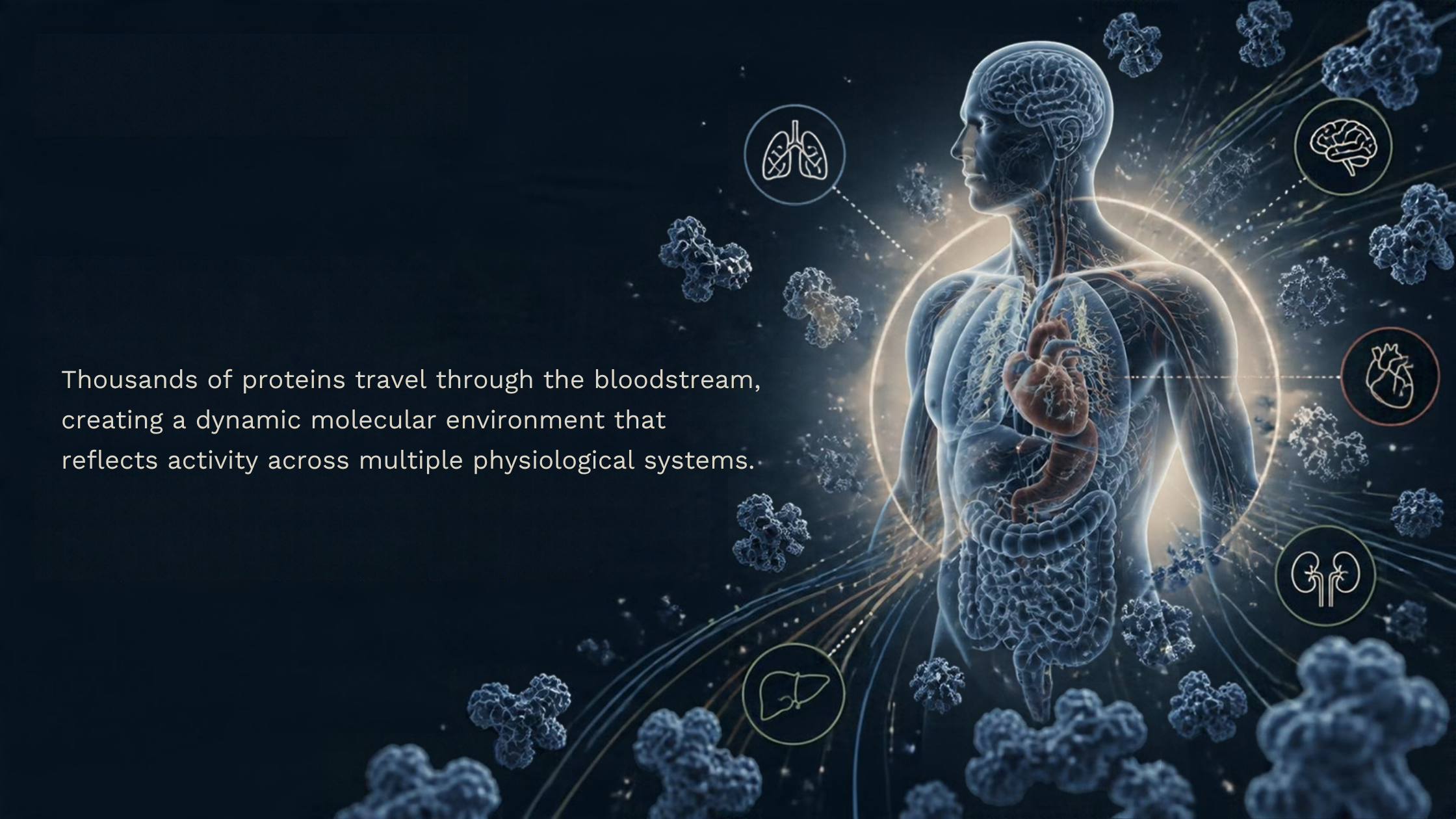
Many of these proteins circulate through the bloodstream, creating a dynamic molecular environment that reflects activity across multiple physiological systems.
Unlike our genetic sequence, which remains largely stable throughout life, the circulating proteome changes in response to aging, disease, environmental exposures, and physiological stress.
This makes plasma proteins particularly interesting to researchers studying the difference between chronological age and biological aging.
Two individuals of the same age may have substantially different molecular profiles, reflecting differences in their underlying physiology.
The ability to measure these differences is opening new possibilities for understanding health and disease.
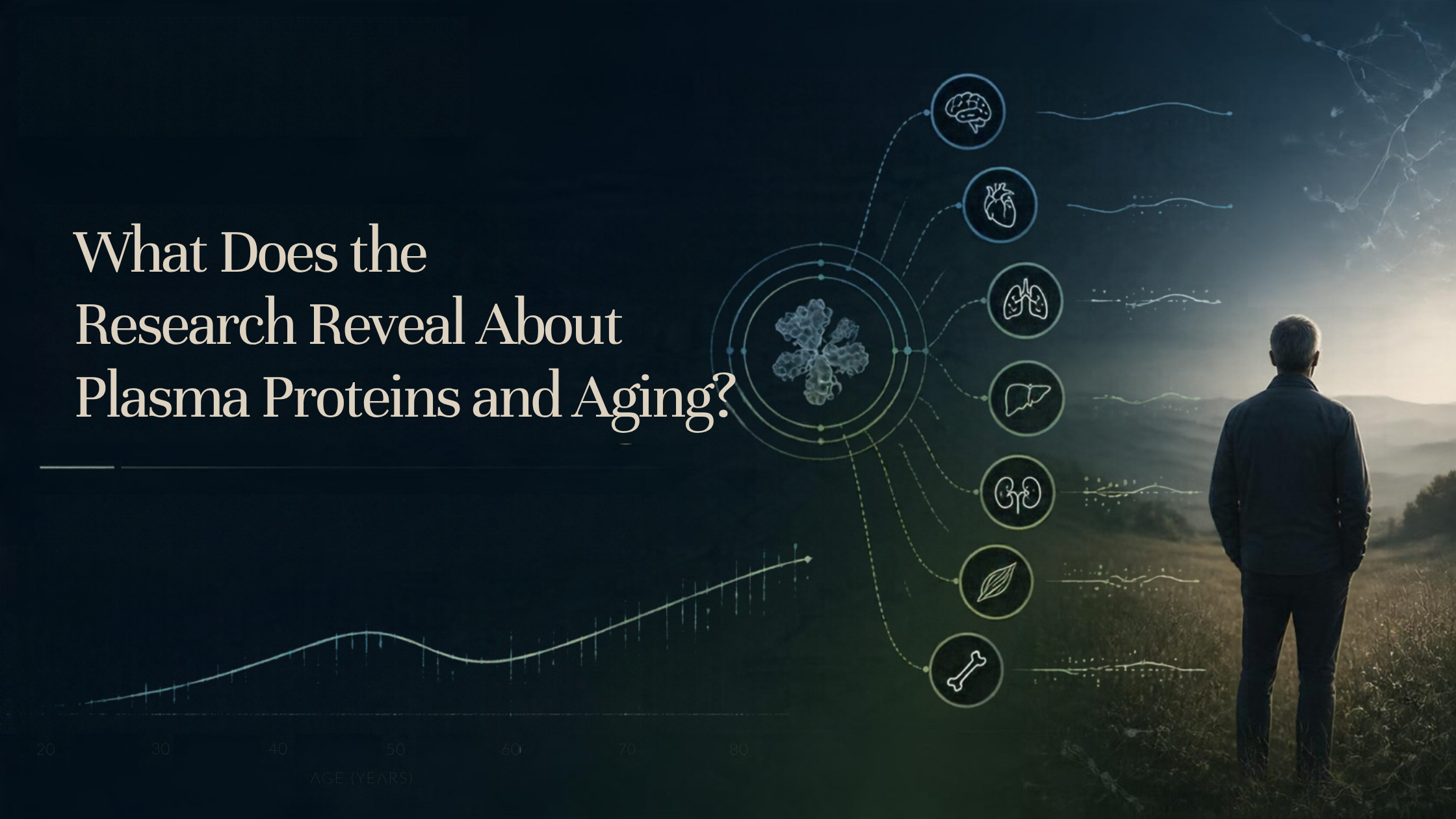
What Does the Research Reveal About Plasma Proteins and Aging?
In a major 2024 study published in Nature Medicine, researchers analyzed nearly 2,900 plasma proteins in more than 45,000 UK Biobank participants.
They identified a set of 204 proteins that could be used to estimate chronological age with considerable accuracy.
More importantly, differences between protein-predicted age and chronological age were associated with the future risk of multiple chronic diseases, including cardiovascular disease, diabetes, cancer, and neurodegenerative conditions.
The findings suggest that the circulating proteome captures important biological information about aging and disease susceptibility.
A separate 2025 Nature Medicine study involving more than 44,000 participants demonstrated that plasma proteins could also help estimate the biological age of individual organs.
Researchers found associations between organ-specific aging signatures and future disease risk, including Alzheimer’s disease, heart failure, and type 2 diabetes.
These studies are important because they demonstrate that biological aging is not necessarily uniform throughout the body.
Different organs and physiological systems may exhibit distinct aging patterns.
For precision medicine, this creates opportunities to better understand where biological vulnerabilities may be developing.
A New Question: Can We Modify the Circulating Environment?
Identifying proteins associated with aging is one part of the scientific challenge.
Another is determining whether changing the circulating environment can meaningfully influence physiological function.
This question has led researchers to investigate plasma dilution and therapeutic plasma exchange.
In 2020, researchers led by Irina Conboy at the University of California, Berkeley, published findings examining the effects of replacing a portion of plasma in older mice with saline and albumin.
The investigators observed improvements in several measures of tissue maintenance and repair, including muscle regeneration, liver-related outcomes, and hippocampal neurogenesis.
These findings challenged the idea that beneficial effects observed in earlier young-blood experiments necessarily required introducing youthful circulating factors.
Instead, the researchers proposed that reducing the concentration of certain age-associated circulating substances might itself influence the biological environment.
The scientific significance is substantial: the circulating environment may be more than a reflection of aging. It may also participate in processes that influence tissue function.
These findings remain primarily preclinical, but they provide a compelling rationale for further investigation.
Where Does Therapeutic Plasma Exchange Fit In?
Therapeutic plasma exchange is an established medical procedure that removes a portion of a patient’s plasma and replaces it with an appropriate replacement fluid, commonly albumin.
During treatment, blood is processed through specialized apheresis equipment. Plasma is separated and removed while blood cells are returned to the circulation.
The procedure can change concentrations of circulating proteins, antibodies, inflammatory mediators, and other plasma constituents.
TPE is already used in conventional medicine for several immune-mediated, hematologic, and neurological disorders.
Its potential role in longevity medicine is an emerging area of research.
The interest comes from an important biological observation: plasma exchange does not simply remove individual molecules. It can alter the broader circulating protein environment.
In the 2020 Berkeley research, investigators also examined human samples associated with therapeutic plasma exchange and reported changes in protein profiles and laboratory measures related to cellular proliferation.
These findings suggest that plasma exchange may influence molecular pathways involved in tissue maintenance and repair.
However, changes in circulating proteins and laboratory markers are not equivalent to demonstrated improvements in human longevity, disease prevention, or lifespan.
Understanding whether these molecular changes translate into meaningful clinical benefits remains an important research priority.
Plasma Exchange, Inflammation, and Cellular Communication
One reason plasma exchange is attracting interest is the relationship between aging and chronic inflammatory signaling.
Aging is frequently accompanied by changes in immune function and circulating inflammatory mediators, sometimes described as inflammaging.
These processes may contribute to altered tissue repair, metabolic dysfunction, and other age-associated physiological changes.
The circulating proteome includes numerous proteins involved in these pathways.
Because TPE can reduce concentrations of certain circulating substances, researchers are exploring whether plasma modification could influence the broader biological signaling environment.
The potential implications extend across several areas of longevity research, including immune regulation, neurological function, and tissue maintenance.
Importantly, plasma exchange affects both potentially harmful and beneficial proteins. Its effects depend on the underlying condition, treatment protocol, and individual patient.
This is why clinical assessment and appropriate patient selection remain essential.
The Future of Longevity Medicine Is Increasingly Molecular
Research into the circulating proteome reflects a broader evolution in precision medicine.
Rather than evaluating physiological systems exclusively through isolated laboratory markers, researchers are increasingly investigating how molecular networks interact across organs and tissues.
Proteomics, genomics, metabolomics, and other advanced analytical methods provide different perspectives on these biological processes.
At the Institute for Human Optimization, this systems-oriented approach is central to our clinical philosophy.
We recognize that meaningful longevity medicine requires an understanding of both molecular biology and physiological function.
Advanced assessments can help characterize biological processes, while functional measurements provide insight into cardiovascular fitness, metabolic health, muscular performance, and adaptive capacity.
Together, these perspectives support more informed clinical decision-making.
Therapeutic plasma exchange is one of the advanced interventions available through the Institute, with its use considered according to clinical suitability, established indications, and the evidence supporting a patient’s specific treatment objectives.
Explore Therapeutic Plasma Exchange at the Institute for Human Optimization
The science of plasma proteins is changing how researchers understand biological aging.
Studies examining organ-specific aging signatures, circulating inflammatory factors, and plasma dilution are opening important questions about the relationship between systemic biology and long-term health.
Therapeutic plasma exchange offers an established method of modifying the circulating plasma environment, making it an important procedure in this evolving scientific conversation.
At the Institute for Human Optimization in Maryland, our physician-led team provides comprehensive clinical evaluation for individuals interested in therapeutic plasma exchange.
Our approach emphasizes medical history, relevant laboratory findings, procedural safety, clinical objectives, and individualized eligibility assessment.
Interested in exploring therapeutic plasma exchange and understanding whether it may be appropriate for you?
Explore Therapeutic Plasma Exchange in Maryland
Learn about the procedure, our clinical approach, and the next steps for evaluation.
Scientific References
1. Argentieri MA, et al. Proteomic aging clock predicts mortality and risk of common age-related diseases in diverse populations. Nature Medicine. 2024;30:2450–2460. https://doi.org/10.1038/s41591-024-03164-7
2. Plasma proteomics links brain and immune system aging with healthspan and longevity. Nature Medicine. 2025. https://doi.org/10.1038/s41591-025-03798-1
3. Oh HS, et al. Organ aging signatures in the plasma proteome track health and disease. Nature. 2023;624:164–172. https://doi.org/10.1038/s41586-023-06802-1
4. Mehdipour M, et al. Rejuvenation of three germ layers tissues by exchanging old blood plasma with saline-albumin. Aging. 2020;12:8790–8819. https://doi.org/10.18632/aging.103418
5. Plasma dilution improves cognition and attenuates neuroinflammation in old mice. GeroScience. 2021. https://pubmed.ncbi.nlm.nih.gov/33191466/
Medical disclaimer: This article is intended for educational purposes and does not constitute individualized medical advice. Therapeutic plasma exchange has established medical indications, but its use for general anti-aging or longevity purposes remains investigational. Molecular and animal research findings do not establish clinical benefit in humans. TPE carries potential risks and requires appropriate medical evaluation.