
Microneedling in Maryland: Advanced Collagen Induction Therapy for Skin Rejuvenation
Beautiful skin is not simply about what we apply to its surface. Its appearance is influenced by collagen, elastin, cellular activity, and the complex biological processes that maintain its structure.
As we age, collagen production changes, skin elasticity declines, and years of environmental exposure contribute to fine lines, uneven texture, and visible signs of aging.
Medical microneedling, also known as collagen induction therapy, offers a way to stimulate the skin’s natural remodeling processes.
At the Institute for Human Optimization in Hanover, Maryland, we bring medical microneedling into a broader approach to regenerative aesthetics, combining advanced treatment techniques with individualized care and an understanding of skin biology.
Whether your goal is to improve acne scars, soften fine lines, refine skin texture, or explore more advanced regenerative aesthetic treatments, microneedling offers a versatile foundation for skin rejuvenation.
What Is Collagen Induction Therapy?
Collagen induction therapy is a medical aesthetic procedure designed to stimulate the skin’s natural wound-healing response.
Using a specialized microneedling device, controlled microchannels are created within the skin. These microscopic injuries activate a sequence of biological events associated with tissue repair and collagen remodeling.
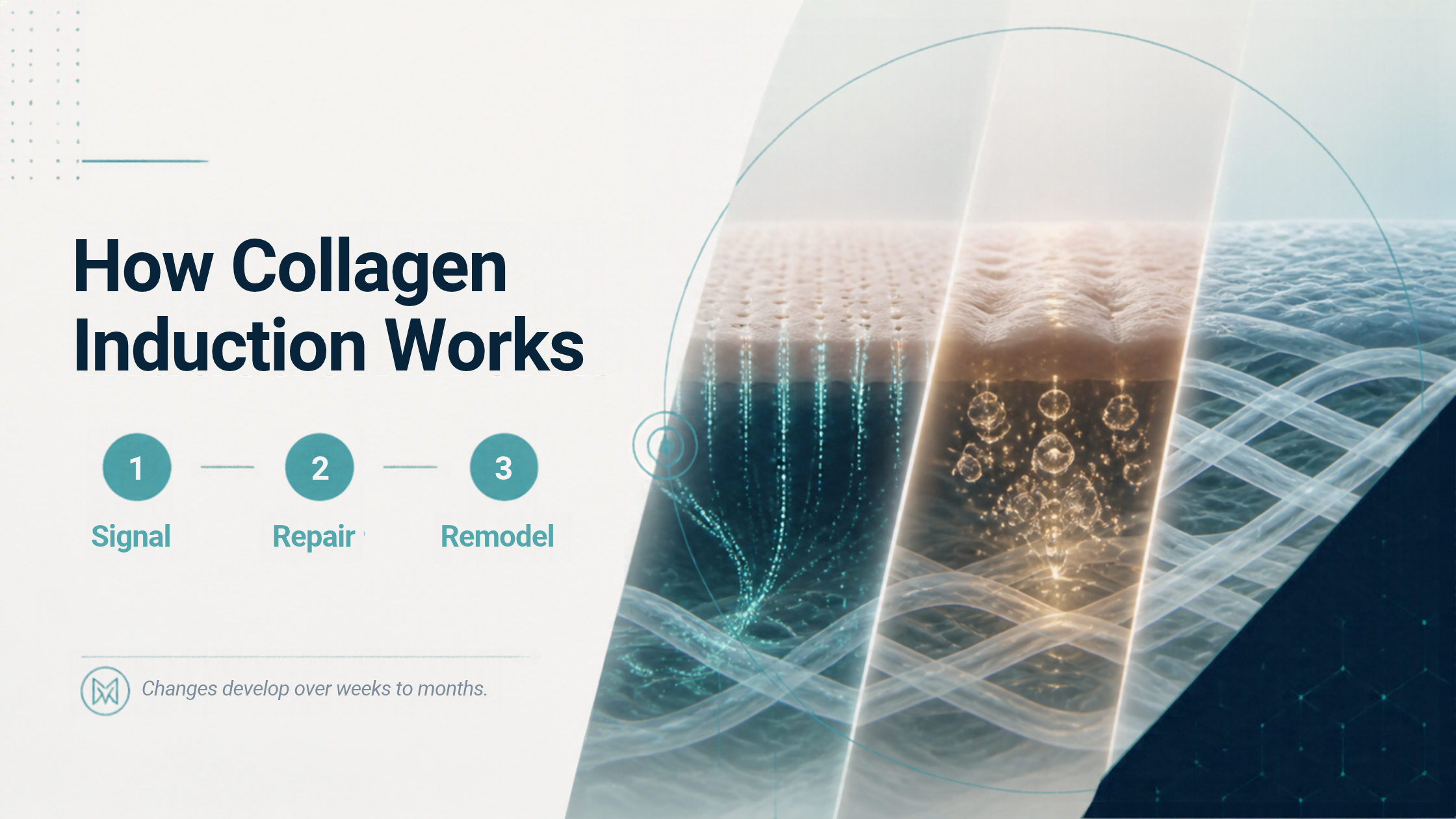
The process involves three overlapping phases:
1. Inflammation and cellular signaling
The controlled micro-injuries initiate a localized response involving platelets, immune cells, growth factors, and other signaling molecules.
2. Cellular proliferation
Fibroblasts and other cells participate in tissue repair, supporting the production of new extracellular matrix components.
3. Collagen remodeling
Over the following weeks and months, collagen is deposited and reorganized as the skin continues its remodeling process.
This is what makes microneedling different from treatments focused exclusively on surface exfoliation.
Rather than simply removing superficial skin cells, medical microneedling engages biological pathways involved in the structure and appearance of the skin.
The Benefits of Medical Microneedling
Microneedling has become a popular option in aesthetic medicine because it can address several common skin concerns without the need for surgical intervention.
Fine Lines and Wrinkles
Collagen and elastin contribute to the skin’s firmness and elasticity.
As these structural proteins change with age, fine lines and wrinkles become more visible.
By stimulating collagen remodeling, microneedling can help improve the appearance of selected facial lines and wrinkles.
Acne Scars
Atrophic acne scars develop when inflammatory acne disrupts normal tissue structure, leaving depressions in the skin.
Microneedling can stimulate collagen remodeling within these areas, gradually improving the appearance of certain acne scars.
The type and depth of scarring influence treatment selection and expected results.
Uneven Skin Texture
Roughness, superficial irregularities, and textural changes can affect how smoothly the skin reflects light.
Microneedling may improve skin texture through gradual tissue remodeling, creating a smoother and more refined appearance.
Skin Firmness and Elasticity
Changes in the extracellular matrix contribute to the visible loss of skin firmness.
Collagen induction therapy targets the biological remodeling processes associated with skin structure, making it an option for patients seeking nonsurgical skin rejuvenation.
Overall Skin Rejuvenation
Microneedling can be incorporated into a comprehensive aesthetic treatment plan to address multiple concerns, including fine lines, acne scarring, and uneven texture.
Because collagen remodeling takes time, improvements typically develop progressively rather than immediately after treatment.
Medical Microneedling vs. At-Home Dermarolling
Not all microneedling treatments are equivalent.
At-home dermarollers generally use shorter needles and are intended primarily for superficial cosmetic effects.
Medical microneedling involves professional equipment capable of delivering controlled treatment at clinically selected depths.
The differences extend beyond the device itself.
Professional treatment includes assessment of skin characteristics, selection of appropriate treatment parameters, infection prevention, and post-procedure guidance.
These considerations are especially important for patients with acne scarring, pigmentation concerns, sensitive skin, or medical conditions that may affect healing.
At the Institute for Human Optimization, our approach emphasizes individualized treatment planning rather than standardized protocols for every patient.
Microneedling With Platelet-Rich Plasma: Advanced Regenerative Aesthetics
For patients interested in combining collagen induction therapy with biologic treatments, microneedling with platelet-rich plasma (PRP) represents an additional option.
PRP is prepared using a sample of the patient’s own blood, which is processed to concentrate platelets.
Platelets contain growth factors and other signaling proteins involved in wound healing and tissue remodeling.
When PRP is incorporated into an aesthetic treatment plan, the objective is to investigate and potentially enhance biological processes associated with tissue repair.
This combination is often called a Vampire Facial®.
Clinical studies have evaluated PRP-assisted microneedling for acne scarring and skin rejuvenation, with encouraging findings in selected patient populations.
At the Institute for Human Optimization, PRP-enhanced microneedling is available as part of our regenerative aesthetics program, subject to individualized clinical assessment.
The Next Generation: Secretome, Growth Factors, and Exosome Research
Regenerative aesthetics is continuing to evolve as researchers develop a deeper understanding of cellular communication.
One of the most interesting emerging areas is the secretome, a collection of biologically active molecules released by cells.
The secretome can contain extracellular vesicles, growth factors, cytokines, peptides, and other molecular signals involved in cellular activity and tissue maintenance.
Researchers are investigating how these molecules influence skin biology, inflammation, collagen remodeling, and tissue repair.
Personalized biotechnology platforms, including those developed by Acorn Biolabs, are exploring secretome formulations derived from an individual’s own cells.
These developments introduce an exciting direction for the future of regenerative aesthetics.
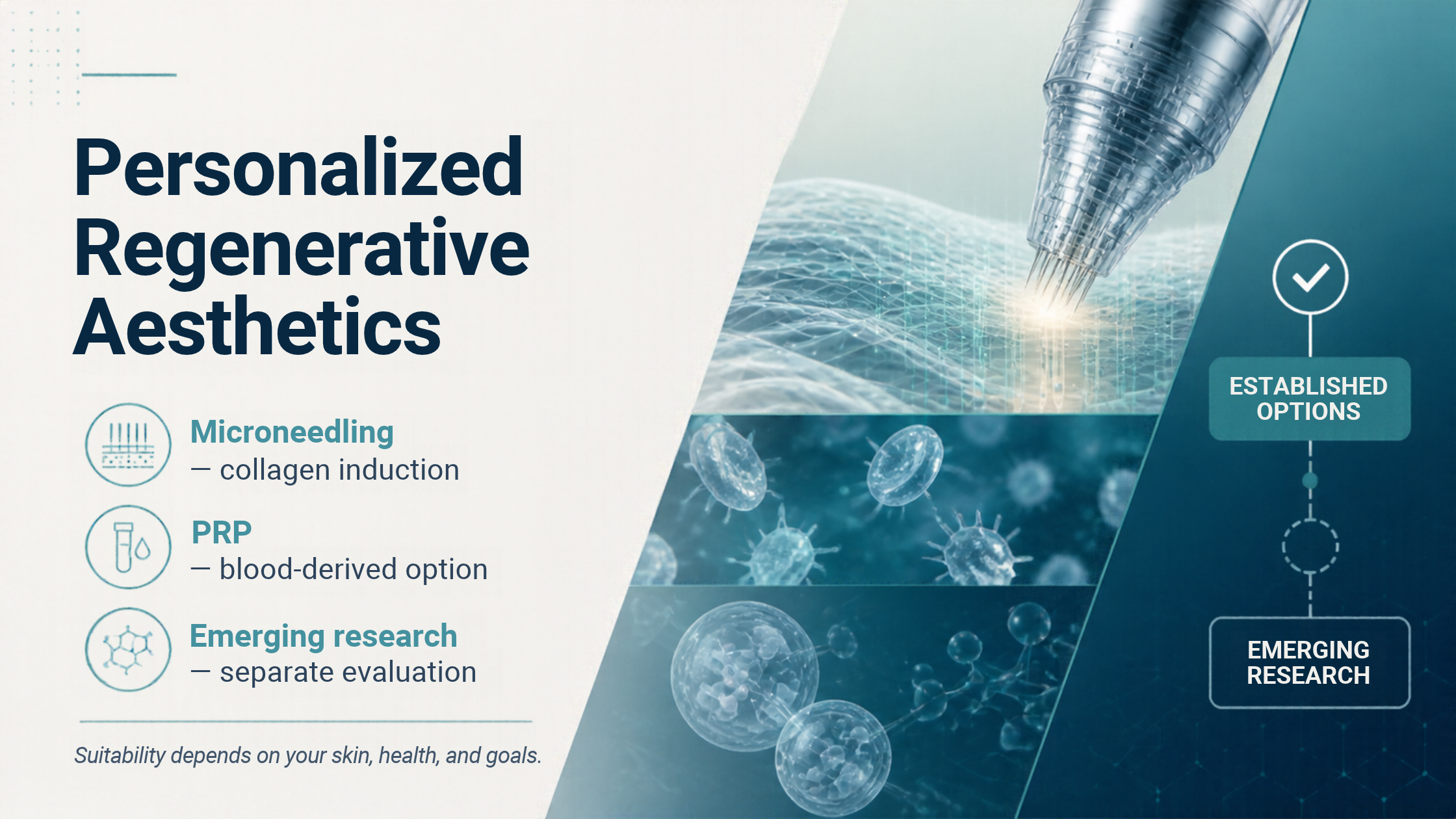
However, exosome and secretome-based interventions are distinct from established microneedling procedures. Their safety, effectiveness, regulatory status, and appropriate clinical applications require separate evaluation.
For patients interested in advanced skin rejuvenation, understanding both established procedures and emerging technologies is an important part of making informed treatment decisions.
What to Expect During Your Microneedling Appointment
Your experience at the Institute for Human Optimization begins with an assessment of your skin concerns, medical history, and treatment goals.
Before Your Treatment
Your care team reviews factors that may influence treatment suitability, including skin conditions, medications, previous procedures, and healing history.
A topical numbing medication may be applied to improve comfort during treatment.
During Your Treatment
A medical microneedling device is passed across the selected treatment area using parameters appropriate to your skin and treatment objectives.
The procedure creates controlled micro-injuries designed to initiate the skin’s natural remodeling response.
Treatment duration depends on the area being addressed and the planned procedure.
After Your Treatment
Temporary redness, sensitivity, tightness, and mild swelling are common following microneedling.
Your skin may resemble a mild sunburn during the initial recovery period.
Patients receive individualized post-treatment instructions, including guidance regarding skin care, sun exposure, and the temporary avoidance of potentially irritating products.
How Many Microneedling Sessions Do You Need?
Collagen induction therapy is a progressive process.
While some patients notice changes in skin appearance after an initial treatment, more substantial improvements may require a series of sessions.
The appropriate number of treatments depends on several factors, including:
* The severity of acne scarring or textural concerns
* The treatment area
* Skin characteristics and healing response
* Individual aesthetic goals
* Whether additional procedures are included in the treatment plan
Microneedling sessions are commonly spaced several weeks apart to allow time for tissue recovery and remodeling.
During your consultation, our team can discuss a treatment schedule appropriate for your individual needs.
Who Is a Good Candidate for Microneedling?
Microneedling may be appropriate for adults seeking improvement in fine lines, acne scars, and uneven skin texture.
However, treatment suitability depends on individual medical and dermatologic considerations.
Certain conditions, including active skin infections, impaired wound healing, a history of abnormal scarring, or medications that affect bleeding and healing, may require treatment modification or postponement.
An individualized evaluation helps determine whether collagen induction therapy is appropriate and whether another aesthetic procedure may better address your concerns.
Why Choose the Institute for Human Optimization for Microneedling in Maryland?
At the Institute for Human Optimization, we approach aesthetic medicine through the broader lens of precision health.
Our practice is medically directed by Anil Bajnath, MD, a board-certified family medicine physician whose work includes precision medicine, longevity medicine, and individualized patient care.
Our regenerative aesthetics program combines medical oversight with advanced aesthetic services and an interest in emerging biotechnology.
We offer:
Medical microneedling: Collagen induction therapy for selected skin concerns, including fine lines, acne scars, and uneven texture.
PRP-enhanced microneedling: An option for patients interested in incorporating platelet-rich plasma into their aesthetic treatment plan.
Individualized aesthetic consultations: Treatment planning based on skin characteristics, medical history, and patient goals.
A broader precision medicine perspective: The opportunity to approach aesthetic care within a practice that considers health and biological aging more comprehensively.
Located in Hanover, Maryland, we welcome patients from Annapolis, Columbia, Ellicott City, Baltimore, Anne Arundel County, Howard County, and the greater Washington, DC region.
Frequently Asked Questions About Microneedling
Does microneedling actually stimulate collagen?
Yes. Microneedling creates controlled micro-injuries that activate wound-healing pathways associated with collagen production and remodeling. This biological response is why the procedure is known as collagen induction therapy.
Is microneedling good for acne scars?
Microneedling can improve the appearance of certain atrophic acne scars. Results depend on the type of scarring, treatment parameters, and individual skin response.
Is microneedling painful?
A topical anesthetic is commonly used to reduce discomfort. Patients may experience pressure, vibration, or mild discomfort during treatment.
How long is the downtime after microneedling?
Redness and sensitivity are common during the first several days. Recovery varies depending on treatment intensity, skin characteristics, and individual healing.
How long does collagen induction take?
Collagen remodeling develops gradually over weeks to months. Patients may require multiple treatments depending on their aesthetic goals.
Is microneedling better than Botox?
Microneedling and neurotoxins address different concerns. Microneedling focuses on collagen remodeling and skin texture, while neurotoxins temporarily reduce muscle activity responsible for selected expression lines. Some patients may benefit from both as part of a comprehensive aesthetic plan.
What is the difference between microneedling and PRP microneedling?
Traditional microneedling relies on controlled mechanical stimulation of the skin. PRP-enhanced microneedling incorporates a platelet-rich preparation derived from the patient’s blood. The additional clinical benefit of PRP varies across studies and indications.
Where can I get medical microneedling in Maryland?
The Institute for Human Optimization provides medical microneedling and regenerative aesthetic consultations in Hanover, Maryland, conveniently located for patients throughout Anne Arundel County, Howard County, Baltimore, Annapolis, and the Washington metropolitan area.
Discover Advanced Collagen Induction Therapy in Maryland
Skin rejuvenation is evolving.
From medical microneedling and platelet-rich plasma to advances in regenerative biotechnology, aesthetic medicine is increasingly informed by our understanding of collagen biology, tissue remodeling, and cellular communication.
At the Institute for Human Optimization, we combine medical oversight, individualized care, and an interest in regenerative science to help patients explore their aesthetic treatment options.
Whether you want to improve acne scars, refine skin texture, or develop a more comprehensive skin rejuvenation plan, our team can help you determine an appropriate approach.
References
* American Academy of Dermatology - Microneedling for Scars and Skin Concerns
* American Academy of Dermatology- Acne Scar Treatments
* FDA- Microneedling Devices: Benefits, Risks, and Safety
* Acorn Biolabs - Personalized Secretome Technology
Medical disclaimer: This article is for educational purposes and does not constitute medical advice. Microneedling is a medical aesthetic procedure with potential risks, including irritation, infection, scarring, and pigmentation changes. Outcomes vary, and treatment suitability must be determined individually. The FDA has not cleared microneedling devices for delivering PRP, cosmetics, drugs, or other products into the skin. Secretome and exosome technologies remain investigational for many aesthetic applications.
