
Renewal,
By Design.
Medical microneedling creates a controlled stimulus within the skin to support collagen remodeling, smoother texture and a more refined complexion.
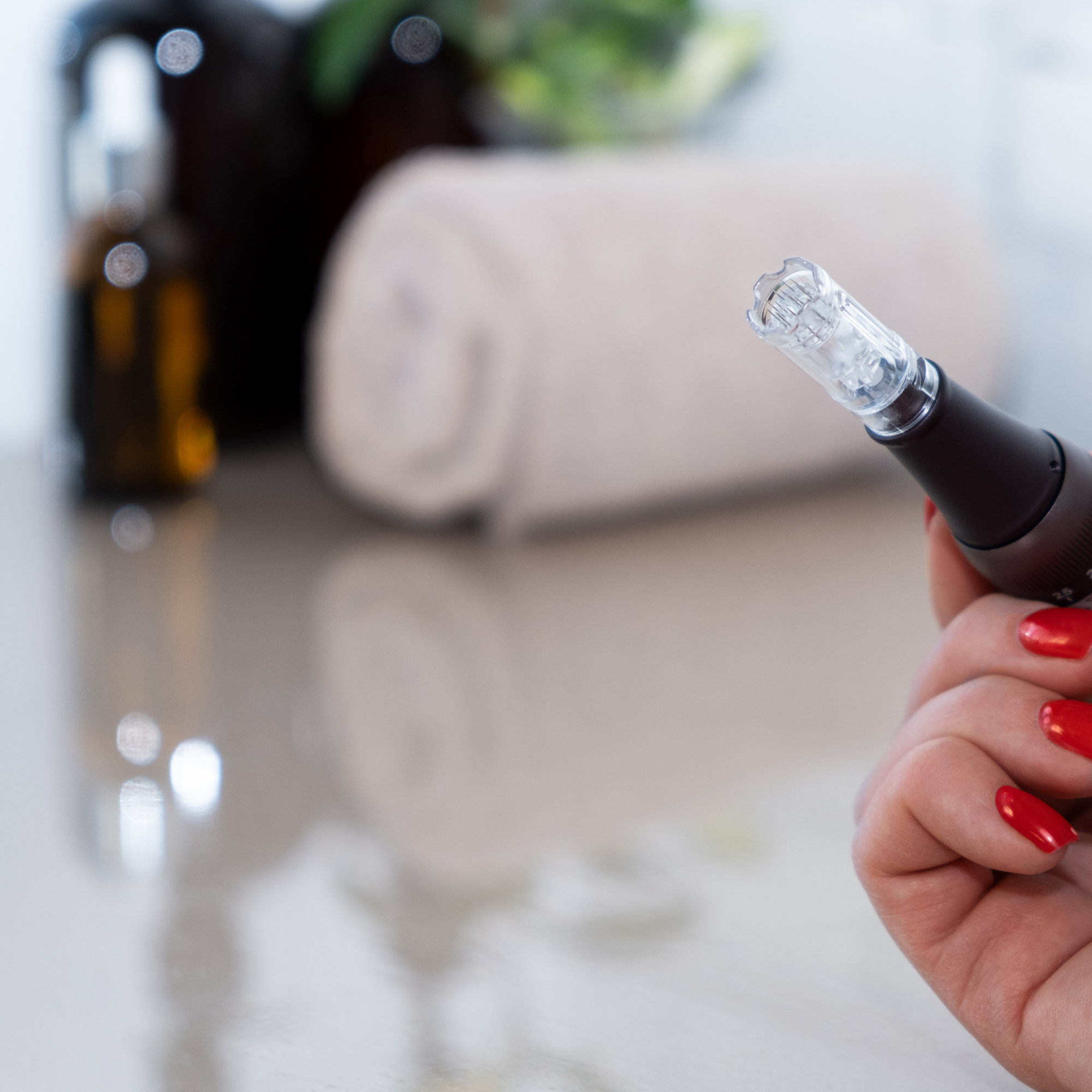
A controlled signal for the skin to rebuild.
Microneedling is a minimally invasive procedure that uses sterile, fine needles to create precise microchannels in the skin. These controlled micro-injuries activate the skin’s wound-healing response and the signaling involved in new collagen and elastin formation.
The goal is not to remove or resurface the outer layer with heat. Instead, treatment creates a measured mechanical stimulus while preserving the surrounding tissue. Needle depth and treatment intensity are adjusted according to the area, skin quality, concern and clinical judgment of your provider.
Because collagen remodeling is gradual, improvement develops over time. Some patients notice an early change in texture or radiance, while more meaningful remodeling may require a planned series and several weeks to months.
Stimulate. Repair. Remodel.
Clinical literature describes microneedling as collagen induction therapy: controlled micro-injuries initiate a coordinated healing response that includes inflammation, new tissue formation and longer-term remodeling. The result is not an instant structural change; it is a progressive biological response within treated skin.
Sterile needles pass through the skin at parameters selected for the treatment area and intended endpoint.
The controlled injury initiates normal wound-healing signals associated with collagen and extracellular-matrix remodeling.
Skin texture and quality may continue to evolve after visible post-treatment redness has resolved.
Skin quality is not one-dimensional.
Microneedling is used across a range of textural and visible skin concerns. Suitability, settings and the number of treatments depend on the condition being addressed and how your skin responds.
Uneven Skin Texture
Supports progressive remodeling where the skin appears rough, irregular or less refined.
Atrophic Acne Scars
May improve selected depressed acne scars by stimulating remodeling within the treated tissue.
Early Visible Aging
Supports collagen renewal in areas with fine lines, crepey texture or early loss of firmness.
Visible Pore Appearance
May refine overall texture and reduce the visible prominence of enlarged pores.
Uneven Pigmentation
May support a more even-looking complexion in appropriately selected patients and protocols.
Selected Scars & Stretch Marks
Can be considered for certain nonfacial textural concerns following evaluation of the area.
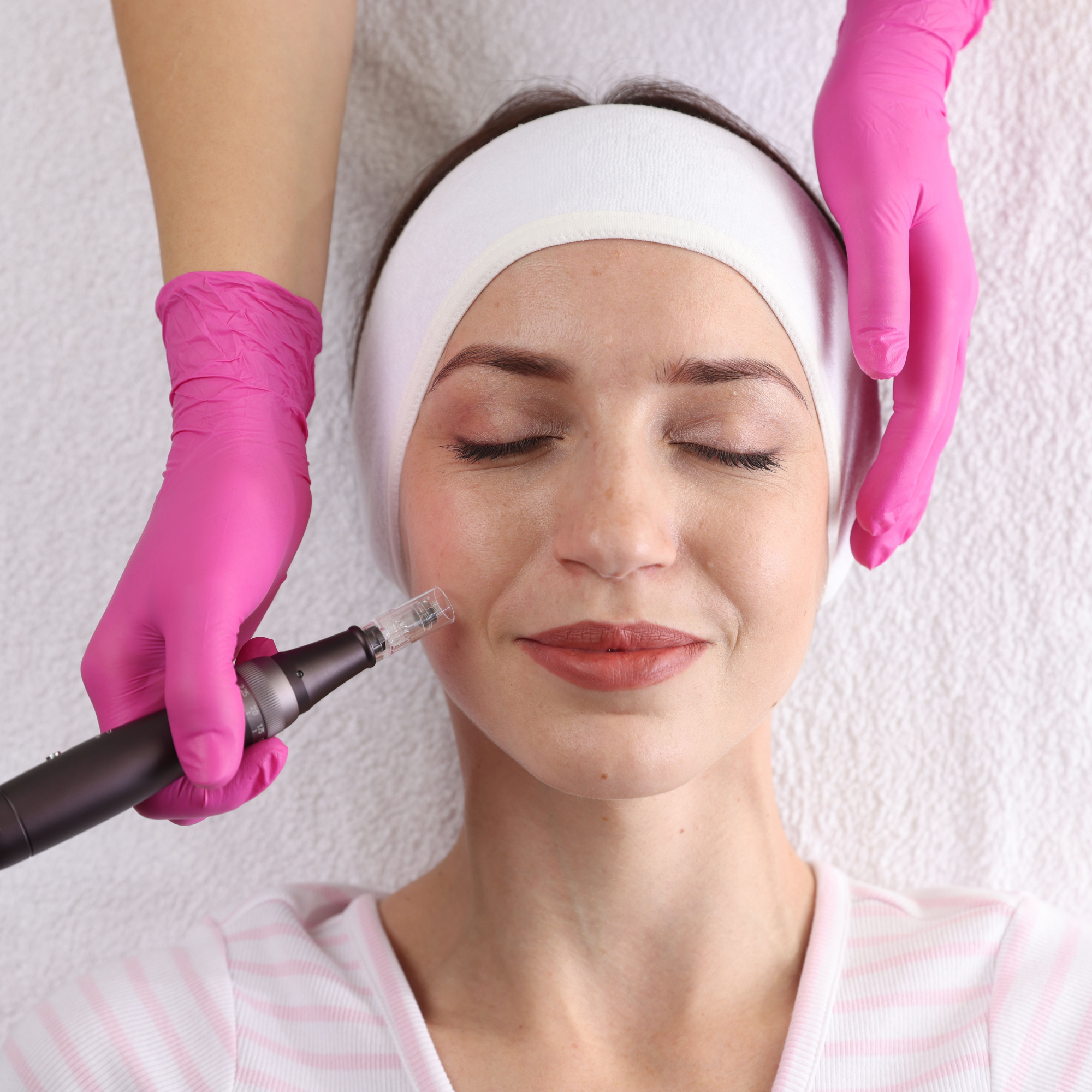
A protocol selected for the skin in front of us.
We offer medical microneedling as a standalone collagen-induction treatment and may combine it with platelet-rich plasma or an exosome-based topical protocol when clinically appropriate. The enhancement is selected for a defined purpose—not added simply because more sounds better.
Your provider determines treatment depth, intensity, number of passes, treated areas and recommended series after evaluating your skin, goals, health history and tolerance for recovery. The protocol and complete price are reviewed before treatment begins.
- Medical microneedling
- Microneedling with platelet-rich plasma (PRP)
- Microneedling with an exosome-based topical protocol
- Personalized single-session or series planning
A deliberate process from preparation through remodeling.
Your visit begins with confirmation of the treatment plan and a review of your skin and relevant history. The skin is cleansed and a topical numbing agent may be used for comfort. The device is then passed methodically across the selected area at settings chosen for your skin and treatment goal.
Immediately afterward, the skin commonly appears red and may feel warm, tight or sensitive. Mild swelling, dryness or flaking can follow. These effects generally improve over several days, while collagen remodeling continues well beyond the visible recovery period.
Day 0: Redness, warmth, tightness and sensitivity are common immediately after treatment.
Days 1–2: Redness and mild swelling generally begin to settle. Skin may feel dry or taut.
Days 2–4: Light flaking or roughness may occur as the surface recovers.
Following weeks: Visible recovery is complete before the deeper remodeling process is finished.
Preparation supports a smoother experience.
Complete your health history accurately and tell your provider about medications, allergies, pregnancy or breastfeeding, active infections, current breakouts, cold sores, inflammatory skin conditions, abnormal scarring, recent procedures and prior reactions. Do not discontinue prescribed medication unless the prescribing clinician instructs you to do so.
When possible, avoid makeup over the intended treatment areas.
Allow time for redness, sensitivity, dryness or flaking to resolve before photographs or special occasions.
Avoid unnecessary sun exposure and use the post-care products and sun protection recommended by your provider.
Wait to resume makeup and active skincare ingredients until the timeframe specified in your personal aftercare instructions.
Clear answers before treatment.
What does microneedling actually do?
Microneedling creates controlled micro-injuries that activate the skin’s repair response. This process supports new collagen and elastin formation and may progressively improve texture, selected scars, fine lines and overall skin quality.
When will I see a result?
An early improvement in radiance or surface texture may become noticeable after recovery. Collagen remodeling is gradual, so more meaningful change can continue developing over several weeks to months, particularly when treatment is performed as a series.
How many treatments will I need?
The recommendation depends on your starting skin condition and goal. A single treatment may support general renewal, while acne scarring or more established textural change often requires a planned series. Your provider will recommend timing after evaluation.
Is there downtime?
Redness, warmth, mild swelling, sensitivity, dryness and flaking may occur. Many patients look sunburned for the first day or two, with visible recovery commonly progressing over several days. Individual healing varies.
Does microneedling hurt?
A topical numbing agent may be applied before treatment. Most patients describe pressure, vibration or a prickling sensation, with sensitivity varying by treatment area and depth.
Why combine microneedling with PRP?
PRP is prepared from a sample of your own blood and contains concentrated platelets and signaling proteins involved in tissue repair. It may be incorporated into selected protocols when the treatment goal and patient assessment support its use.
Why combine microneedling with an exosome-based protocol?
An exosome-based topical may be paired with microneedling as part of a clinician-selected regenerative protocol. Exosomes are extracellular vesicles involved in cell-to-cell signaling and remain an active area of research. Product sourcing and clinical suitability are reviewed before use.
Is microneedling appropriate for every skin concern?
No. Active infection, inflamed acne, certain skin conditions, healing concerns and other clinical factors may make treatment inappropriate or require postponement. Your provider will determine whether microneedling fits your skin and goals.
Better skin quality starts with the right protocol.
Reserve a microneedling consultation with Aesthetics by the Institute in Hanover, Maryland. We will evaluate your skin, clarify the concern you want to address and recommend a treatment approach before you proceed.
- Individualized skin and treatment-area assessment
- Standard, PRP or exosome-based protocol recommendation
- Single-session or series recommendation
- Complete treatment price presented in advance