
The Secretome Revolution: Unlocking the Future of Regenerative Aesthetics and Precision Medicine
From personalized stem cell-derived secretomes to advanced microneedling and platelet-rich plasma, discover how cellular science is transforming the possibilities of skin rejuvenation.
What if the future of skin rejuvenation wasn’t simply about what we put on the skin, but about understanding the biological signals that influence how our skin renews itself?
For decades, aesthetic medicine has focused on correcting the visible signs of aging. Wrinkles, loss of elasticity, uneven texture, and declining collagen production have traditionally been addressed through topical products, injectables, lasers, and other procedures.
Now, a new generation of regenerative technologies is expanding that conversation.
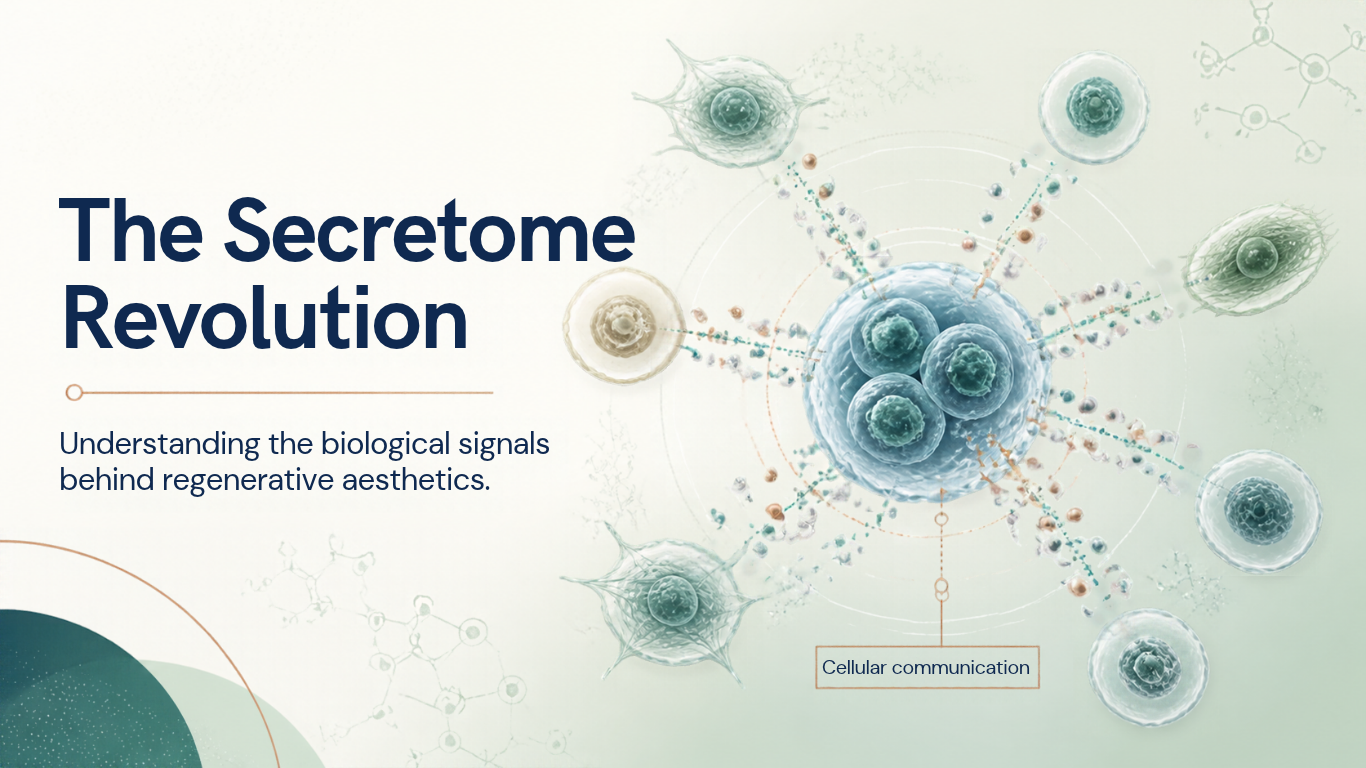
At the center of this evolution is the secretome, a complex collection of biologically active molecules released by cells that help coordinate cellular communication, tissue remodeling, and repair.
From growth factors and peptides to exosomes and extracellular matrix molecules, the secretome is drawing attention across regenerative medicine, biotechnology, and advanced aesthetics.
At the Institute for Human Optimization in Hanover, Maryland, we see this field as part of a larger transformation in medicine: moving toward increasingly personalized approaches informed by the biology of the individual.
What Is the Secretome, and Why Is It Changing the Conversation Around Skin Aging?
Your skin is far more than a protective barrier. It is a dynamic organ made up of cells that continuously communicate, respond to environmental stressors, and participate in tissue maintenance.
Much of that communication occurs through molecular signaling. The secretome refers to the collection of substances released by cells into their surrounding environment.
These substances include:
Exosomes and extracellular vesicles: Tiny particles that transport molecular information between cells.
Growth factors: Proteins involved in collagen synthesis, cellular activity, and tissue remodeling.
Cytokines: Signaling molecules that influence immune responses, inflammation, and tissue repair.
Peptides: Amino acid chains that participate in biological signaling and skin function.
Hyaluronic acid and extracellular matrix molecules: Components associated with hydration, tissue structure, and elasticity.
Antioxidant enzymes: Molecules involved in the regulation of oxidative stress.
These aren’t simply cosmetic ingredients. They participate in fundamental biological processes involved in how tissues function. Understanding their interactions is creating opportunities to investigate skin rejuvenation at the molecular level.
Personalized Secretome: Regenerative Science Derived From Your Own Cells
One of the most exciting directions in regenerative biotechnology is the development of personalized secretome formulations. Companies such as Acorn Biolabs are exploring a different model of skin care: producing cell-derived formulations from an individual’s own biological material.
Through Acorn’s technology, cells collected from hair follicles can be preserved and cultured to produce a personalized secretome containing growth factors, extracellular vesicles, peptides, and other signaling molecules. Unlike conventional formulations built around a few selected active ingredients, secretome technology investigates a broader collection of naturally occurring cellular signals.
The concept is compelling.
Rather than approaching skin rejuvenation exclusively through externally selected ingredients, personalized biotechnology creates the possibility of working with molecules derived from the individual’s own cells.
This represents an important shift in how researchers and biotechnology companies are thinking about regenerative aesthetics.
Learn more about Acorn’s personalized secretome technology.
Beyond Traditional Skin Care: The Rise of Regenerative Aesthetics
Traditional aesthetic medicine has given patients powerful tools for addressing the visible effects of aging.
Neurotoxins can soften selected expression lines. Dermal fillers can restore volume. Medical-grade skin care can address pigmentation, texture, and skin barrier concerns.
Regenerative aesthetics adds another dimension: the biological processes associated with tissue remodeling and repair.
This growing field brings together several technologies and treatment approaches, including medical microneedling, platelet-rich plasma, and emerging cell-derived products.
The objective is not necessarily to replace traditional aesthetic medicine.
It is to expand the range of available approaches and create more individualized treatment strategies.
At the Institute for Human Optimization, our interest in regenerative aesthetics reflects the same philosophy that guides our precision medicine practice: understanding the individual before selecting the intervention.
Medical Microneedling: Stimulating the Skin’s Natural Collagen Response
One of the most versatile procedures in regenerative aesthetics is medical microneedling, also known as collagen induction therapy.
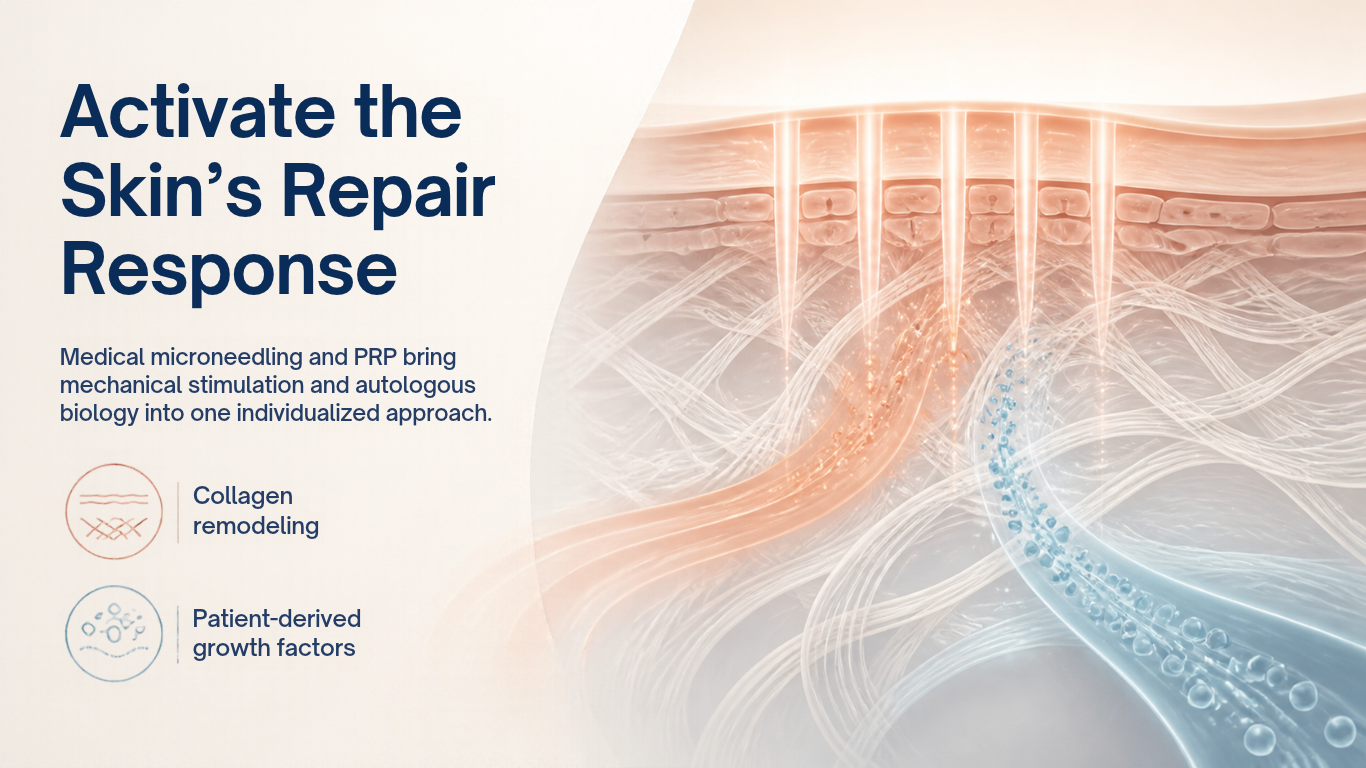
Microneedling creates controlled micro-injuries within the skin, activating biological pathways involved in wound healing and extracellular matrix remodeling.
These processes stimulate fibroblast activity and support the production and reorganization of collagen.
For appropriately selected patients, microneedling can improve the appearance of:
Fine lines and wrinkles
Acne scars
Uneven skin texture
Certain superficial scars
Overall skin smoothness
Because skin characteristics and treatment goals vary, medical microneedling should be individualized rather than approached as a one-size-fits-all procedure.
At our Hanover, Maryland, practice, microneedling is part of our expanding regenerative aesthetics program.
Patients can explore standalone medical microneedling as well as platelet-rich plasma-enhanced treatment options.
Interested in microneedling in Maryland? Request a consultation with the Institute for Human Optimization.
Microneedling With PRP: Combining Collagen Induction With Your Own Growth Factors
Platelet-rich plasma, commonly known as PRP, has become an important area of interest in regenerative aesthetics. PRP is prepared from a sample of the patient’s own blood, which is processed to concentrate platelets. These platelets contain growth factors involved in cellular signaling and tissue repair.
When combined with medical microneedling, PRP introduces an additional biologic component to a procedure already designed to stimulate collagen remodeling.
Often referred to as a Vampire Facial®, this combination has been studied for skin rejuvenation and acne scarring.
Research suggests potential benefits for selected patients, although results vary and protocols are not standardized across all studies.
For patients exploring regenerative facial treatments in Maryland, microneedling with PRP offers an approach that combines a mechanical collagen induction procedure with an autologous biologic preparation.
Exosomes and Secretome: The Next Frontier in Regenerative Skin Science
If microneedling represents a way to activate the skin’s natural repair response, secretome research represents an effort to understand the molecular communication involved in that response. Extracellular vesicles, including exosomes, can transport biologically active molecules between cells.
Growth factors participate in pathways involved in fibroblast activity, collagen synthesis, and tissue remodeling.
Cytokines influence inflammatory signaling.
Together, these molecules form complex biological networks that researchers are investigating for potential applications in regenerative medicine.
This is why the secretome has attracted such significant scientific interest. Rather than examining a single growth factor or signaling protein in isolation, researchers can investigate the interactions among multiple molecular components.
In aesthetic medicine, this has generated interest in secretome-containing formulations and their potential relationship to skin hydration, texture, appearance, and post-procedure recovery.
Clinical research is still developing, and the effectiveness of individual formulations cannot be inferred from their ingredient lists alone.
Nevertheless, the ability to study cellular communication at this level represents a fascinating direction for the future of personalized aesthetics.
The Connection Between Regenerative Aesthetics and Longevity Medicine
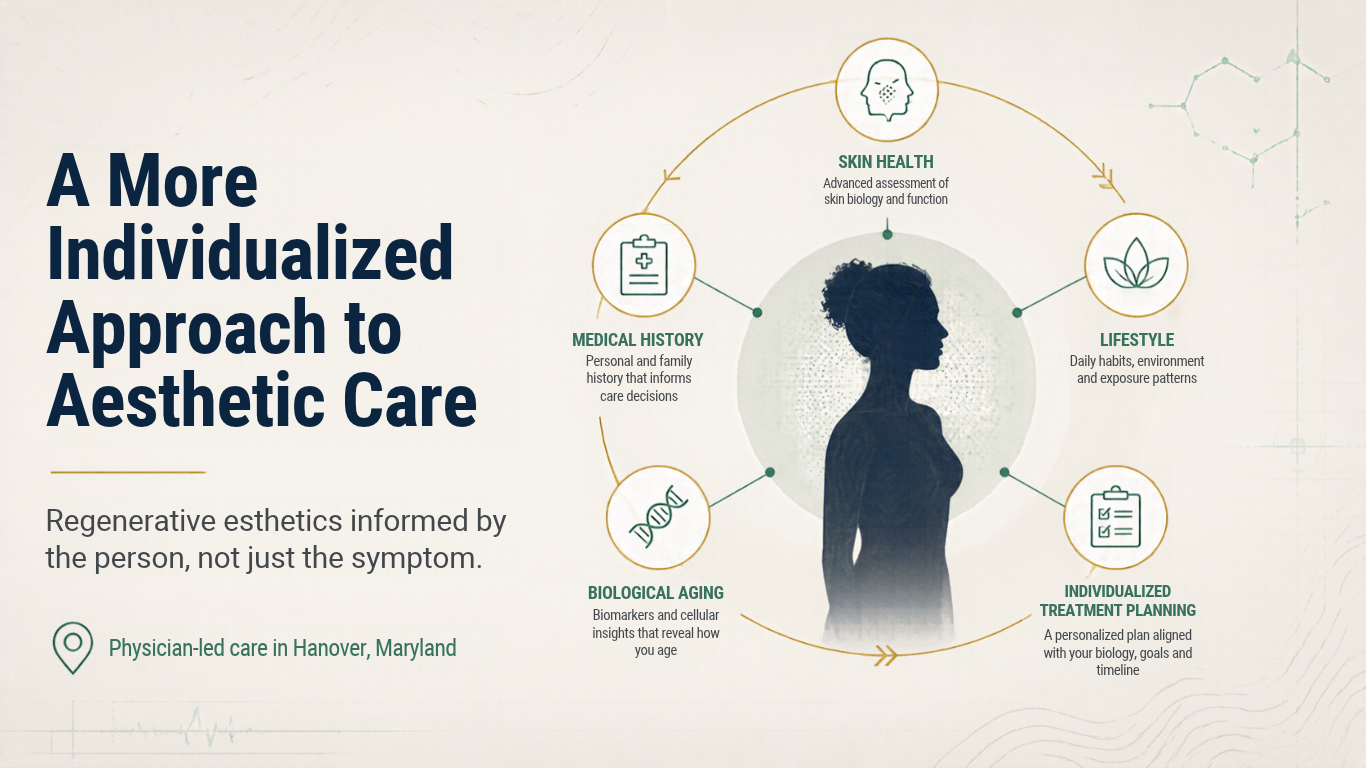
Skin aging does not occur independently of the rest of the body. It is influenced by intrinsic biological aging, environmental exposure, hormonal changes, metabolic processes, inflammation, and changes in extracellular matrix composition.
This creates a natural intersection between regenerative aesthetics and longevity medicine.
At the Institute for Human Optimization, our broader work in precision medicine encourages us to consider the individual rather than focusing exclusively on isolated symptoms or cosmetic concerns.
For some patients, aesthetic care may be relatively straightforward: addressing skin texture, acne scars, or facial lines.
For others, a more comprehensive conversation about skin health, medical history, lifestyle, and treatment goals may be appropriate.
Our philosophy is not that every patient requires extensive testing or advanced biologic technology.
It is that aesthetic medicine benefits from the same clinical judgment and individualized planning expected in other areas of medical care.
Why Choose the Institute for Human Optimization for Regenerative Aesthetics in Maryland?
The Institute for Human Optimization is a physician-led precision medicine practice located in Hanover, Maryland, serving patients throughout Anne Arundel County and the greater Baltimore-Washington region.
Under the medical direction of Anil Bajnath, MD, our practice brings together individualized medical care, advanced diagnostics, longevity medicine, and an expanding regenerative aesthetics program.
Our approach offers several important distinctions.
Medical oversight. Aesthetic procedures are evaluated within a medical practice with attention to patient history, treatment suitability, and clinical considerations.
Advanced treatment options. Our aesthetic program includes medical microneedling, PRP-enhanced procedures, neurotoxins, dermal fillers, and individualized skin care planning.
Precision medicine perspective. We recognize that skin health and visible aging reflect multiple biological and environmental influences.
Interest in emerging biotechnology. We actively evaluate developments in cellular signaling, regenerative products, and personalized aesthetic technologies.
Individualized care. Our goal is to help patients explore treatments appropriate to their concerns rather than recommend the same procedure to everyone.
Whether you are exploring microneedling in Annapolis, regenerative aesthetics near Columbia, or physician-led skin rejuvenation in the Baltimore-Washington area, the Institute for Human Optimization offers a medically informed approach to aesthetic care.
Frequently Asked Questions
What is secretome skin rejuvenation?
Secretome skin rejuvenation refers to the emerging use of formulations containing cell-derived signaling molecules, such as growth factors, peptides, cytokines, and extracellular vesicles. These formulations are being investigated for their potential roles in skin health and regenerative aesthetics.
What makes personalized secretome technology different?
Personalized secretome technology can use cells collected from the individual to produce a cell-derived formulation. Acorn Biolabs, for example, uses hair follicle-derived cells in its personalized secretome platform.
Can microneedling improve collagen production?
Yes. Medical microneedling initiates a controlled wound-healing response that can stimulate collagen remodeling. It is used for selected skin texture concerns, fine lines, and acne scarring.
What is the difference between PRP and secretome?
PRP is a platelet-rich preparation derived from blood. Secretome refers to a broader collection of substances released by cells. Their compositions, manufacturing processes, and clinical evidence differ.
Are exosomes used in regenerative aesthetics?
Extracellular vesicles and exosome-containing products are subjects of active research in aesthetic medicine. Their clinical use is subject to regulatory requirements, and no exosome products are currently FDA-approved in the United States.
Where can I find regenerative aesthetics and microneedling in Maryland?
The Institute for Human Optimization offers physician-led aesthetic services, including medical microneedling and PRP-based procedures, at its Hanover, Maryland, location.
Discover the Future of Regenerative Aesthetics in Maryland
The future of aesthetic medicine is being shaped by advances in cellular biology, precision diagnostics, regenerative biotechnology, and individualized treatment planning.
From medical microneedling and platelet-rich plasma to the emerging science of personalized secretomes, the possibilities for studying and addressing skin aging continue to expand.
At the Institute for Human Optimization, we bring these conversations together within a physician-led practice focused on precision medicine, longevity, and individualized care.
Your skin is unique. Your aesthetic treatment plan should be, too.
Request Your Regenerative Aesthetics Consultation
Explore medical microneedling, PRP, advanced aesthetic treatments, and personalized skin rejuvenation at the Institute for Human Optimization.
Institute for Human Optimization
7030 Hi-Tech Drive, Suite 101
Hanover, Maryland 21076
Scientific References
Acorn Biolabs: Personalized Secretome for Skin
Effectiveness of Regenerative Medicine for Skin Lightening and Rejuvenation: Systematic Review
FDA: Consumer Alert on Regenerative Medicine Products Including Exosomes
Medical disclaimer: This article is intended for educational purposes. Secretome and extracellular vesicle technologies remain areas of active research. No exosome products are currently FDA-approved in the United States. Product regulatory status, permissible applications, safety, and effectiveness vary. Medical and aesthetic procedures involve potential risks, and individual outcomes cannot be guaranteed. Consultation with a qualified medical professional is necessary to determine treatment suitability.
