
Peptide Therapy in Maryland: A New Era for Precision Medicine and Longevity
Peptide medicine is entering a new chapter. For patients interested in longevity, recovery, metabolic health, and regenerative medicine, the possibilities are exciting.
In July 2026, an FDA advisory committee recommended that six peptides be considered for inclusion on the federal list of bulk substances eligible for certain pharmacy compounding applications:
BPC-157
MOTS-c
Semax
TB-500
Epitalon
KPV
For physicians who have followed peptide research and its potential applications in human health, these recommendations represent a meaningful step forward. At the Institute for Human Optimization (IFHO) in Hanover, Maryland, we believe medical progress requires an openness to emerging science, a commitment to understanding human physiology, and the willingness to explore new therapeutic possibilities responsibly.
What Is Peptide Therapy?
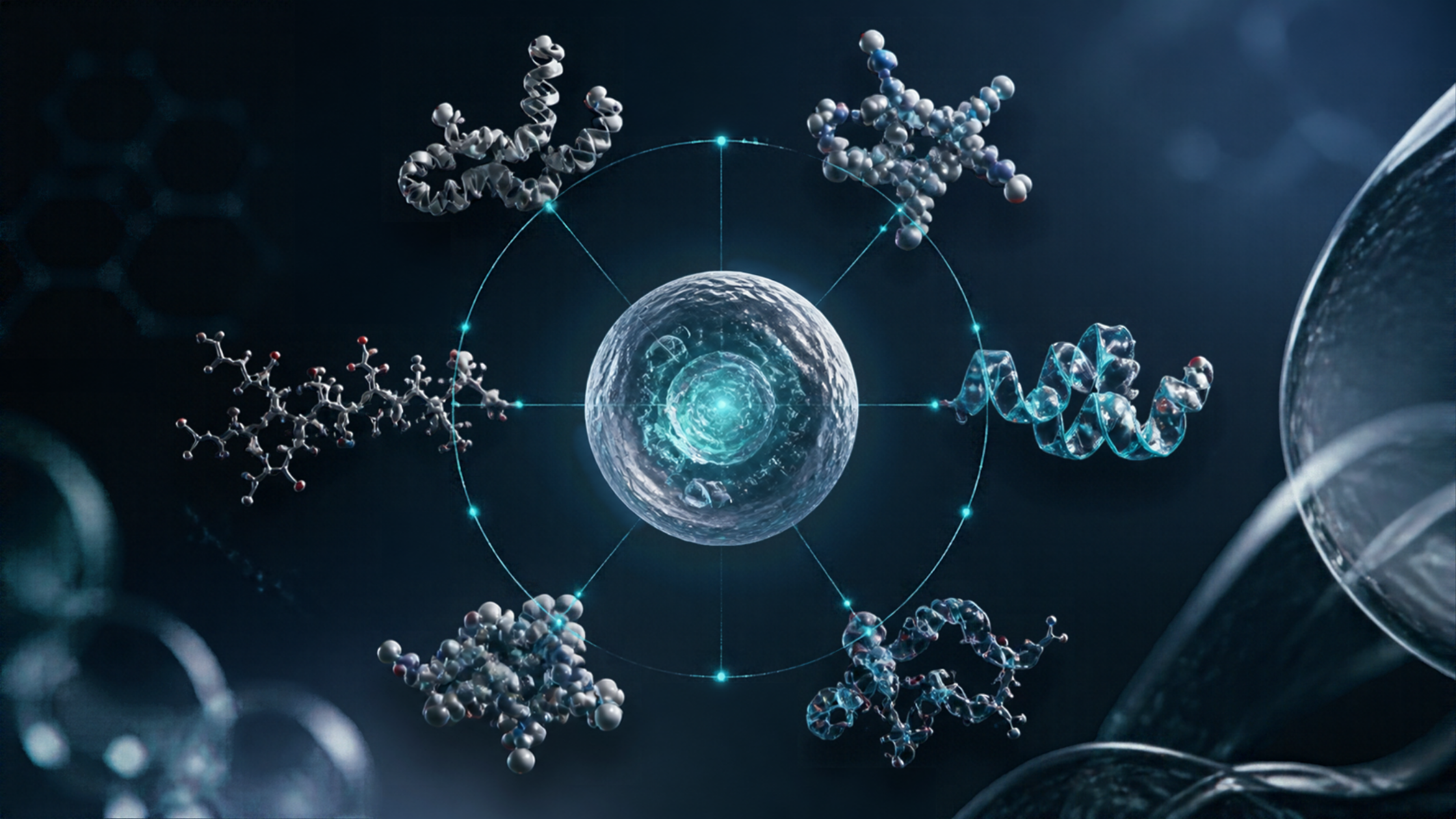
Peptides are short chains of amino acids that participate in biological signaling throughout the body. They influence fundamental processes, including:
* Hormone regulation
* Metabolic signaling
* Inflammatory cascades
* Cellular communication
* Tissue repair and function
Some peptide-based medications are already well established in conventional practice insulin and GLP-1 receptor agonists are clear examples of peptide science translating into standard clinical care. Other peptides remain investigational, with growing interest in their potential applications across longevity medicine, regenerative biology, neurological health, and metabolic optimization.
Rather than addressing health concerns in isolation, peptide research provides a framework to investigate the molecular pathways that influence systemic human physiology.
Six Peptides Generating New Interest in 2026
The recent advisory committee discussions have renewed attention around six specific compounds:
1. BPC-157: Tissue Repair & Gastrointestinal Research
BPC-157 has attracted significant interest for its potential role in tissue repair, inflammatory signaling, and gut biology. Much of the enthusiasm originates from preclinical studies evaluating tissue protection and healing mechanisms.
2. MOTS-c: Metabolic Health & Mitochondrial Biology
A mitochondrial-derived peptide, MOTS-c is being investigated for its relationship to metabolic regulation, cellular energy pathways, and adaptive responses to metabolic stress. Its connection to mitochondrial signaling places it at the center of ongoing metabolic and longevity research.
3. Semax: Neurological & Cognitive Research
Semax has been studied for potential neurological applications, specifically pathways related to neuroprotection and cerebral function. It represents an emerging area of interest in how peptide signaling impacts brain health.
4. TB-500: Regenerative Biology
TB-500 has drawn attention in studies examining cellular migration, tissue remodeling, and wound healing—biological pathways central to tissue recovery and regenerative medicine.
5. Epitalon: Aging Biology & Cellular Regulation
Investigated in experimental models focused on aging-related biological processes and cellular regulation, Epitalon reflects ongoing efforts to understand the molecular drivers of biological aging.
6. KPV: Inflammation & Immune Signaling
KPV is a small peptide studied for its influence on inflammatory pathways, specifically its interactions with immune signaling and local tissue responses.
Important Note: These compounds remain investigational and are not FDA-approved for these proposed therapeutic uses. Preclinical and early research potential should not be conflated with established clinical efficacy.
Why the 2026 FDA Developments Matter
On July 23–24, 2026, the FDA’s Pharmacy Compounding Advisory Committee reviewed several peptide substances for potential inclusion on the Section 503A Bulks List, with six receiving favorable recommendations.
This represents an encouraging shift for the peptide research community and for clinicians dedicated to individualized medicine. While advisory recommendations do not constitute formal FDA approval or immediate compounding authorization, they highlight a critical transition: peptide medicine warrants rigorous scientific evaluation rather than blanket dismissal.
Medical innovation relies on continuous research, active regulatory engagement, sound clinical judgment, and the translation of molecular discoveries into safe, measurable patient care.
Peptide Therapy in Maryland: Why Physician Oversight Matters
As public interest in peptides accelerates, patients across Maryland, Washington, D.C., and Northern Virginia are seeking knowledgeable medical guidance.
Peptide therapy should never begin by ordering a compound from an online catalog. Clinically sound care starts with foundational questions:
1. What physiological pathway are we aiming to modulate?
2. Is there a clearly defined, measurable clinical objective?
3. What level of evidence supports the proposed intervention?
4. What are the potential risks, contraindications, and alternatives?
5. How will patient response and biomarker changes be objectively tracked?
At IFHO, our protocol begins with a comprehensive assessment of the individual evaluating medical history, metabolic markers, endocrine function, body composition, and specialized diagnostics. The objective is never to prescribe more therapies; it is to make informed, precise clinical decisions.
Our Approach at the Institute for Human Optimization
Founded by Anil Bajnath, MD, the Institute for Human Optimization is a physician-led longevity, precision medicine, and human performance center in Hanover, Maryland.
Our clinical philosophy rests on a single principle: individual biology must dictate the medical strategy.
Peptide therapy is evaluated within a cohesive, multi-system framework:
* Precision and functional medicine
* Endocrine and metabolic optimization
* Healthspan and longevity strategy
* Advanced diagnostic testing and biomarker tracking
* Body composition and functional performance assessments
* Regenerative medicine
The Broader Horizon of Longevity Medicine
The true promise of peptide science reaches beyond any single molecule. It lies in gaining a clearer picture of biological communication:
* How do cells coordinate tissue repair?
* How does mitochondrial signaling dictate metabolic resilience?
* What mechanisms govern systemic inflammation and tissue remodeling?
* How can modulating these pathways preserve cognitive and physical function over time?
As molecular diagnostics, computational biology, and individualized therapeutics converge, peptide research will remain a vital area of study in the pursuit of optimized healthspan.
Explore Physician-Led Care in Hanover, Maryland
If you are exploring peptide science and personalized medicine, partnering with an experienced medical team is the essential first step. At the Institute for Human Optimization, we help patients navigate emerging therapies through rigorous diagnostics, clinical evidence, and personalized care planning.
* Address: 7030 Hi-Tech Drive, Suite 101, Hanover, MD 21076
* Phone: (410) 858-4086
* Text: (410) 914-1189
* Web: [www.ifho.org](https://www.ifho.org)
Request a Consultation to learn more about our physician-led approach to longevity medicine and personalized health optimization.
Medical Disclaimer: Peptide therapies vary significantly in regulatory status, safety profiles, and scientific evidence. Investigational peptides discussed in this article are for educational purposes and are not necessarily available or offered at IFHO. All clinical recommendations require an individualized medical evaluation in compliance with applicable state and federal laws.
