

Hyperbaric Oxygen Therapy in Maryland: What the Research Says About Longevity
What happens when the body is exposed to higher levels of oxygen for a carefully controlled period? That question has given hyperbaric oxygen therapy an established place in medicine and opened a promising line of research into how our cells respond as we age.
If you’re exploring hyperbaric oxygen therapy in Maryland, some of the most interesting findings come from studies that measured changes in human immune cells. Those findings give researchers a concrete starting point:
Can the changes be reproduced?
How long do they last?
Could they eventually translate into better health or function?
At the Institute for Human Optimization in Hanover, Maryland, Dr. Anil Bajnath helps patients put that research in context. The conversation starts with what you want to improve, what the evidence says about that goal, and whether a clinical evaluation makes sense for you.
What Hyperbaric Oxygen Therapy Does
During hyperbaric oxygen therapy, you breathe oxygen inside a chamber pressurized above normal atmospheric pressure. The higher pressure allows more oxygen to dissolve in your blood plasma. That effect has established medical applications, including:
Decompression sickness
Selected problem wounds
Delayed radiation injury
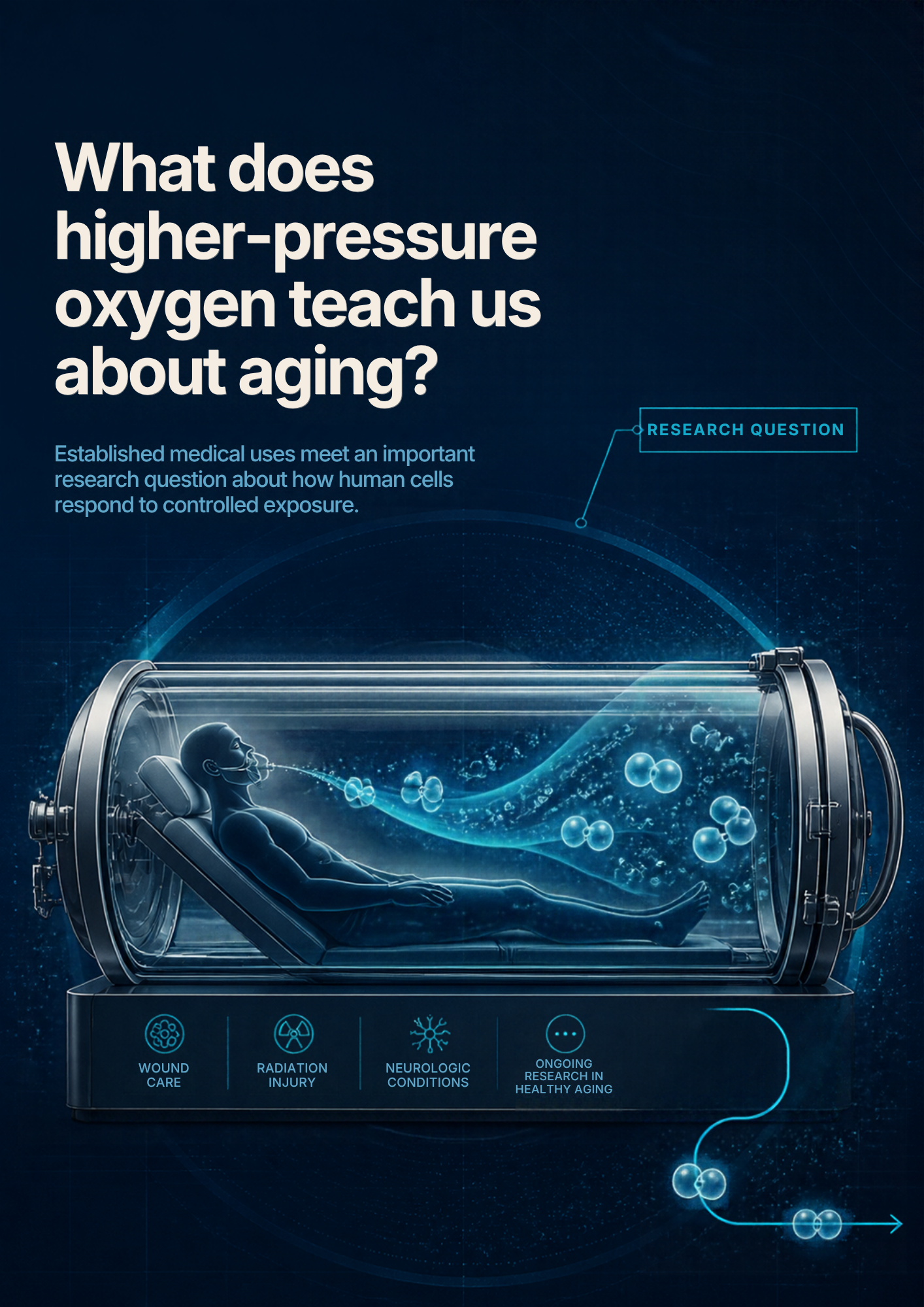
The United States Food and Drug Administration has cleared hyperbaric chambers for specific medical uses. Research into healthy aging asks a different question about the same tool: What can repeated, controlled exposure teach us about how human cells respond to oxygen?
What the Human Research Shows About Telomeres
A 2020 study enrolled 35 independently living adults aged 64 and older in a course of 60 hyperbaric oxygen sessions. Researchers collected blood samples before, during, and shortly after the course. They reported increases of more than 20 percent in measured telomere length in several types of immune cells, along with decreases in the proportion of certain immune cells classified as senescent.
Telomeres are protective structures at the ends of chromosomes, and researchers study them as one marker of cellular aging. What makes this study worth following is that researchers could measure changes in specific types of human immune cells after a defined course of treatment.
However, it is important to keep the limitations in mind:
The study was small and had no untreated comparison group.
Its final blood samples were collected one to two weeks after the last session.
The next step is to see whether larger controlled studies can reproduce the findings, determine how long the changes last, and assess whether they correspond to improvements in health or daily function.
Why the Oxygen Dose Matters
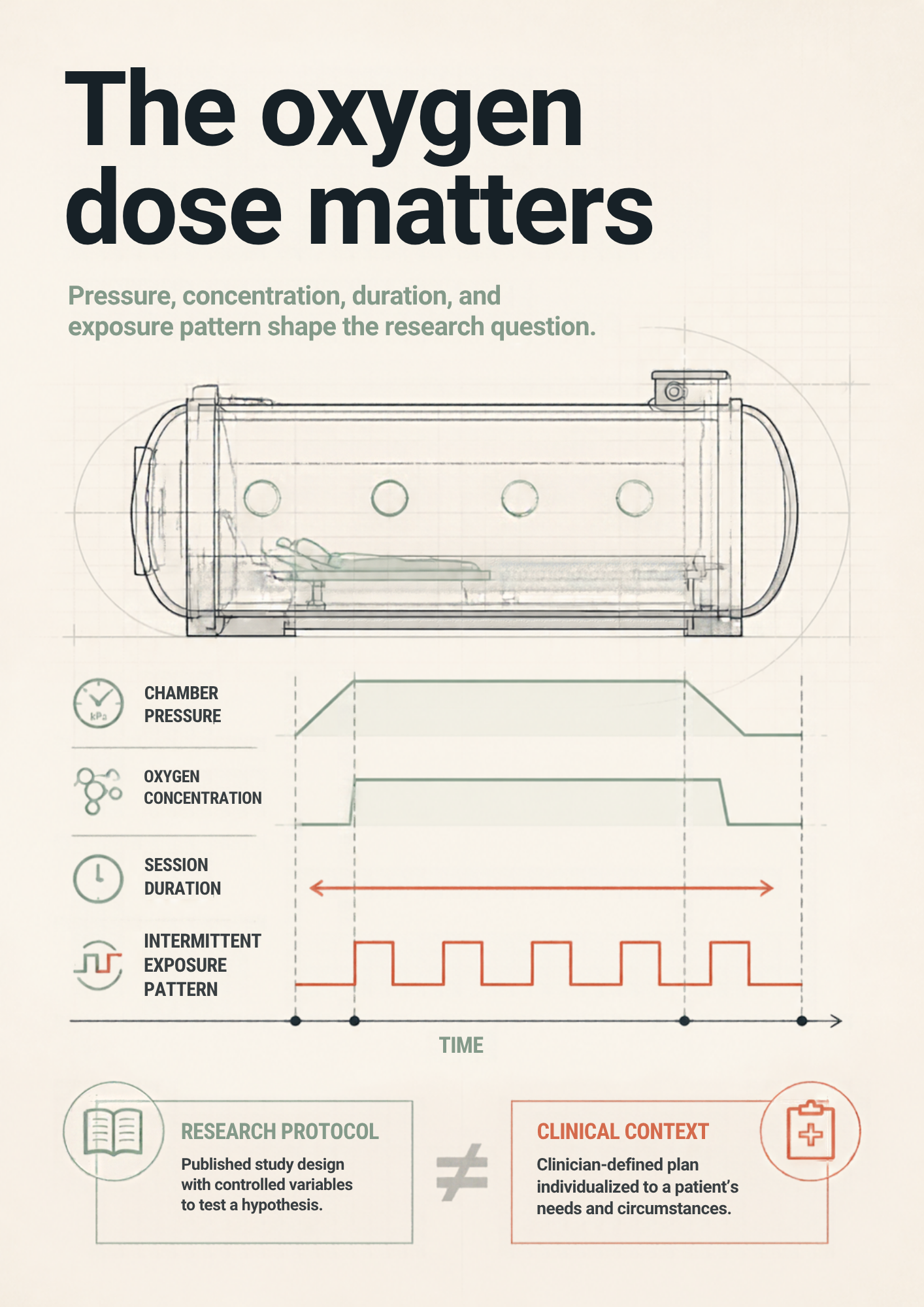
The amount of oxygen a person receives depends on several factors:
Chamber pressure
Oxygen concentration
Length and pattern of exposure
Researchers have proposed that intermittent exposure may trigger adaptive responses, which is one reason they’re interested in how the body responds across a series of sessions.
The protocol matters when you’re comparing research with a service offered by a clinic. A good consultation can explain which protocol was studied, how it relates to the proposed treatment, and what outcome would make sense to follow.
What About Recovery, Cognition, and Skin Aging?
Recovery, cognition, and skin health are all questions researchers can study directly, though each needs its own measures:
Exercise recovery: A study might track how quickly someone returns to their usual activity.
Cognition: A study might look at changes in memory or attention.
Cellular aging: The telomere study measured immune-cell markers, so its findings are most informative about those specific markers.
If one of these areas is what brought you to hyperbaric oxygen therapy, say so during your consultation. A specific goal gives your physician a way to discuss the research that’s most relevant to you and what you might reasonably expect.
What to Expect From Medical Screening
A medical review helps determine how well you may tolerate the pressure and oxygen exposure. The team may ask about your ear, sinus, and lung history, along with relevant medications, surgeries, or implanted devices.
Because pressure changes and high-oxygen environments carry specific considerations, safety is a priority:
Pressure changes can cause ear or sinus discomfort or injury.
Temporary vision changes can occur, and oxygen toxicity can cause seizures in rare cases.
Oxygen-rich environments require strict fire safety procedures.
Before a session, ask how the team monitors you and what happens if you have difficulty equalizing pressure or develop symptoms.
How Dr. Bajnath Evaluates Hyperbaric Oxygen Therapy
You can come to the consultation with a goal or a question. You may want to understand what a published study means for you, what a session feels like, or whether a particular use has evidence that applies to your situation.
Dr. Bajnath reviews your medical history and discusses potential benefits, risks, and next steps. If treatment is appropriate, you can agree on what to follow and when to review it. Depending on the reason for treatment, that might be a specific symptom or a measure of function. Laboratory changes can add context when relevant, while long-term health outcomes require a different kind of evidence.
Frequently Asked Questions
Can hyperbaric oxygen therapy reverse aging? Early human research has found changes in some immune-cell markers associated with aging. That is an encouraging direction for research. Whether those changes lead to better function, fewer age-related illnesses, or longer life remains unknown.
How many sessions are needed for longevity? There is no established schedule for longevity. The 60 sessions in the 2020 study describe the protocol researchers used to study immune-cell markers. If you’re considering hyperbaric oxygen therapy, ask how the proposed schedule relates to your specific goal and what evidence supports it.
Is hyperbaric oxygen therapy cleared for healthy aging? The United States Food and Drug Administration has cleared hyperbaric chambers for specific medical uses. Healthy aging and lifespan extension remain areas of research.
What happens if I request a consultation? Tell us what you’re interested in and what you hope to improve. We’ll discuss what the evidence can tell you, what a session involves, and whether further evaluation is appropriate.
Explore Hyperbaric Oxygen Therapy in Hanover, Maryland
If the research has made you curious about hyperbaric oxygen therapy, bring your questions to the Institute for Human Optimization. A consultation with Dr. Anil Bajnath can help you understand how the evidence relates to your goals and what a next step could look like.
References
United States Food and Drug Administration guidance on hyperbaric oxygen therapy
Hyperbaric chamber device summary listing recognized clinical indications
Medical Disclaimer: This article is for general education and does not provide individual medical advice, diagnosis, or treatment. The potential benefits and risks of hyperbaric oxygen therapy depend on the reason for treatment, the protocol, and your medical history. Consult a qualified healthcare professional to determine whether evaluation or treatment is appropriate for you.
